
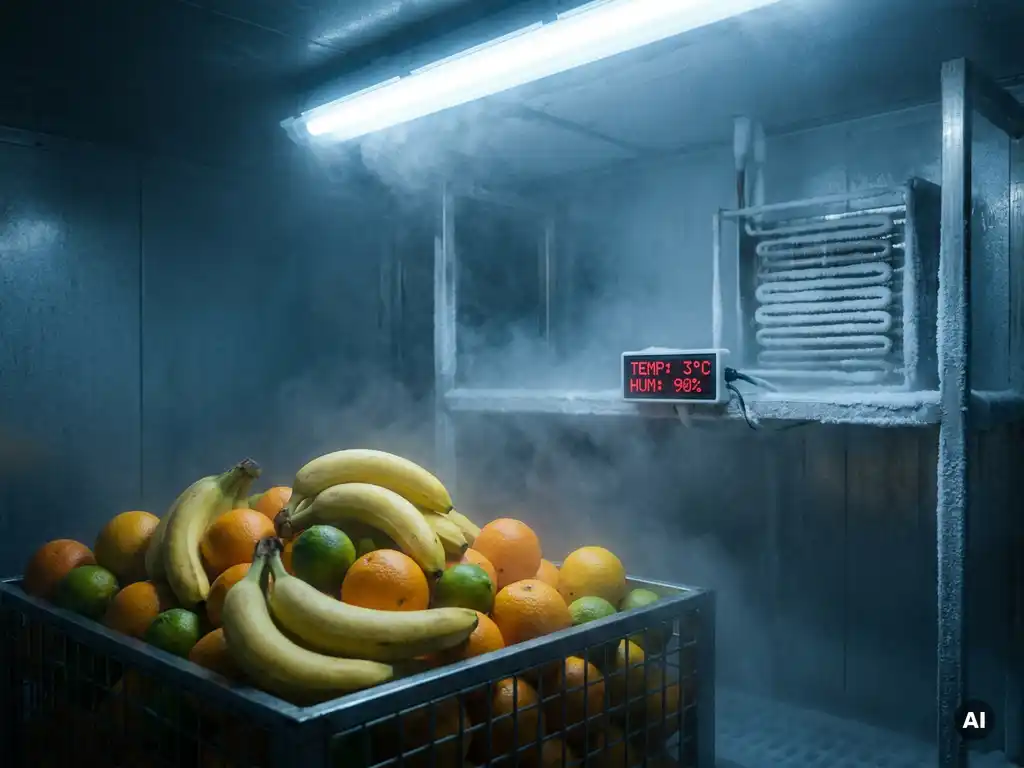
During food storage, data is recorded regarding temperature, humidity, batch numbers, receipt and shipment dates, and the results of quality checks. Exactly which data is required depends on the type of product, applicable certifications, and legal frameworks such as HACCP and European food legislation. In this article, we answer the most frequently asked questions about record-keeping obligations for food storage.
What legal obligations apply to registration for food storage?
Any party storing foodstuffs is legally required to maintain a traceability system based on the European General Food Regulation (EU) No 178/2002. This means that for each product, at least the origin, destination, and storage conditions must be recorded so that prompt action can be taken in the event of an incident.
Specifically, the legislation requires warehousing companies and logistics service providers to maintain the following basic data:
- Name and address of the supplier or manufacturer
- Nature and quantity of the delivered products
- Date of receipt and date of delivery
- Name and address of the customer
In addition to this basic obligation, temperature-sensitive products are subject to supplementary requirements under the European Hygiene Regulation (EC) No 852/2004. Storage temperatures must be demonstrably recorded and retained. For importers of products from outside the EU, the requirements of the NVWA and the KCB also apply, which govern the phytosanitary inspection of, among other things, fresh fruit and vegetables.
What data is recorded during temperature-controlled storage?
During temperature-controlled storage of food products, at a minimum of temperature logs, humidity measurements, batch data, and inspection reports are maintained. Together, this data constitutes proof that products have been stored under the correct conditions throughout the entire storage period.
In practice, this concerns the following categories of registrations:
- Climate recordings: continuous measurement of temperature, humidity, and air circulation per cell or storage space
- Batch data: LOT numbers, grower numbers, and product specifications linked to each pallet
- Receipt records: date and time of arrival, country of origin, quantity and state of packaging
- Quality measurements: temperature measurements upon arrival, moisture content and, where relevant, Brix measurements
- Delivery details: date, recipient, quantity, and batch number per delivered shipment
Fresh and delicate products such as exotic fruit require special attention. Bananas and citrus fruits are sensitive to even small deviations in temperature or humidity. Therefore, it is not sufficient to record only the average cell temperature; fluctuations and alarms must also be recorded and documented.
How is storage data automatically captured and stored?
Storage data is automatically captured via sensors and data loggers that measure continuously and store the results in a central system. Modern warehouses link these systems to a Warehouse Management System (WMS), so that climate data and inventory data are available in one place and can be accessed directly per batch or pallet.
Data loggers record temperature and humidity at fixed intervals, typically every five to fifteen minutes. If deviations from the set ranges occur, an alarm is automatically generated so that immediate action can be taken. The recorded values are stored in the WMS database and can later be retrieved by time, cell, and batch.
Additionally, EDI connections make it possible to automatically share storage data with customer or buyer systems. Inbound notifications, inventory updates, and status reports then proceed without manual intervention, which reduces errors and shortens lead times. Barcode-driven traceability ensures that every pallet can be directly linked to the corresponding climate records and batch documentation via a scan.
What is the difference between HACCP registration and BRC registration?
HACCP registration is a legally mandatory system for identifying and controlling food safety risks, whereas BRC registration is an additional, voluntary certification that imposes more extensive requirements on documentation, system management, and audits. In practice, BRC builds upon the HACCP foundation and adds extra layers of verification.
HACCP registration: the legal basis
HACCP stands for Hazard Analysis and Critical Control Points. Every company that processes, stores, or distributes food products is required to draw up a HACCP plan. This plan describes what risks exist, at which points in the process they are controlled, and how this is recorded. Typical records include temperature logs, cleaning reports, and deviation records at critical control points.
BRC registration: the audit standard
The BRC Global Standard for Storage and Distribution goes beyond the statutory minimum requirements. Certified companies are audited annually by an independent certification body. The standard sets requirements for, among other things, documentation management, product traceability, employee training, and the internal audit cycle. For many supermarket chains and major customers, BRC certification is a prerequisite for doing business at all.
The difference in daily practice: HACCP determines the minimum requirements for recording; BRC also determines how those records are managed, stored, and verified. Both systems complement each other and cannot be viewed separately in a professional storage environment.
How long must food storage data be retained?
In most cases, food storage records must be retained for at least two years, but the exact retention period depends on the product's expiration date and the applicable certification requirements. Longer periods generally apply to products with a long shelf life or to BRC-certified companies.
European food legislation stipulates that traceability data must be available for as long as it can reasonably be expected that a product remains in the chain. As a rule of thumb, many companies apply a retention period of two to five years for temperature logs, batch documentation, and quality reports.
BRC imposes additional requirements: records must be retained until at least the product's expiration date plus one year, with an absolute minimum of three years for certain document categories. It is advisable to document the retention periods per document type in writing in an internal document management protocol, so that it is immediately clear which system is being used during an audit.
What role do storage data play in product tracing and recalls?
Storage data is the backbone of effective product traceability. In the event of a recall or food safety incident, batch records, climate logs, and delivery data make it possible to determine within a short time which products have been affected, where they went, and which customers need to be informed.
European legislation requires companies to be able to act quickly and demonstrably in the event of a recall. This requires that the link between batch numbers, storage periods, and customers be accessible at any time. A system in which LOT numbers and grower numbers are linked to every pallet and the associated climate records makes this possible without time-consuming manual searching.
In practice, product traceability works best when storage data is recorded digitally and is searchable by multiple parameters: batch number, date, product, country of origin, and buyer. Barcode-driven systems significantly accelerate this process. The more detailed the registration during storage, the narrower the scope of a potential recall and the more limited the damage for all parties involved.
How ZZColdstores helps with registration and traceability in food storage
ZZColdstores combines climate-controlled storage with a fully integrated registration system, ensuring that all relevant data is automatically captured and available when needed. What this means in practice:
- Temperature, humidity, and air circulation are monitored and recorded 24/7 per storage cell
- Each pallet is fully traceable via barcode scanning, linked to LOT and grower numbers
- Upon arrival, quality checks are performed, including temperature, humidity, and Brix measurements, with reporting upon request
- EDI connections ensure automatic inventory updates and inbound notifications in the customer's systems
- ZZColdstores is certified with BRC and SKAL and operates in accordance with the KCB/NVWA requirements for import inspections
Would you like to know how climate-controlled storage at ZZColdstores is set up for your specific product flow? Or do you have questions about the registration and traceability options for your goods? Contact us , and we will discuss together what best suits your situation.
Frequently Asked Questions
What happens if my storage records are incomplete during an NVWA inspection?
During an inspection by the NVWA, incomplete or missing records can lead to an official warning, a fine, or even a temporary suspension of storage activities. The inspector assesses not only whether data is present but also whether it is complete, up-to-date, and accessible. It is therefore advisable to conduct regular internal audits and proactively test your registration system for completeness and accessibility.
As a small importer or distributor, can I also meet the BRC requirements, or is that only reserved for large companies?
BRC certification is in principle achievable for any company, regardless of size, as long as the processes and documentation are in order. For smaller companies, the investment in time and resources is relatively greater, but the standard takes the scale of the operation into account. A good first step is to have a GAP analysis performed by a certified consultant to clarify which steps are still required before a formal audit.
How do I know if my current WMS is suitable for the registration obligations regarding food storage?
A suitable WMS for food storage must support at least LOT traceability, integration with climate data, automatic alarm recording, and export capabilities for audit purposes. Also check whether the system supports EDI connections and whether historical data is searchable by batch, date, and storage cell. If your current system does not offer these features, it is advisable to consult a specialized logistics service provider or WMS supplier with experience in the food industry.
What should I do if a temperature alarm goes off during the storage of my products?
In the event of a temperature alarm, it must be immediately determined how long the deviation lasted, the magnitude of the exceedance, and which batches may have been exposed to the deviating conditions. These findings must be documented in a deviation report, including the corrective measure taken. Depending on the product and the duration of the deviation, it may be necessary to conduct a quality assessment before the affected batches are delivered further.
Are digital records as legally valid as paper logbooks during an audit or recall?
Yes, digital records are legally equivalent to paper logbooks, provided they meet the requirements of integrity, immutability, and accessibility. This means that the system must be able to demonstrate that data has not been modified retrospectively and that it is quickly available upon request in a readable format. BRC and the NVWA accept digital systems but do impose requirements regarding the security and backup management of the stored data.
How do I handle registration obligations for products that are stored by multiple parties before they arrive at my location?
As a warehousing company, you are responsible for records from the moment of receipt, but you must also be able to demonstrate the traceability of the preceding links. This means that upon receipt, you must request and retain the corresponding documentation from the supplier, such as batch certificates, transport temperature reports, and documents of origin. Ensure that these documents are digitally linked to the internal batch registration so that the entire chain is verifiable in the event of a recall or audit.
How often do temperature recording sensors and data loggers need to be calibrated?
For HACCP compliance and BRC certification, sensors and data loggers must be calibrated at least annually by an accredited calibration company; however, in practice, many companies use a semi-annual cycle for critical measurement points. The calibration certificates must be kept as part of the technical documentation and are required to be available during an external audit. Also, check whether your WMS automatically signals when a calibration period is approaching, so that you do not miss any expiration dates.
Related articles
- How much does it cost to rent a storage unit?
- What is customs clearance and why is it mandatory for imports?
- What is buffer storage and how does it help your factory run stably?
- What is the correct storage temperature for potato flakes and powder?
- How do you switch from on-premises storage to outsourced ambient storage?