
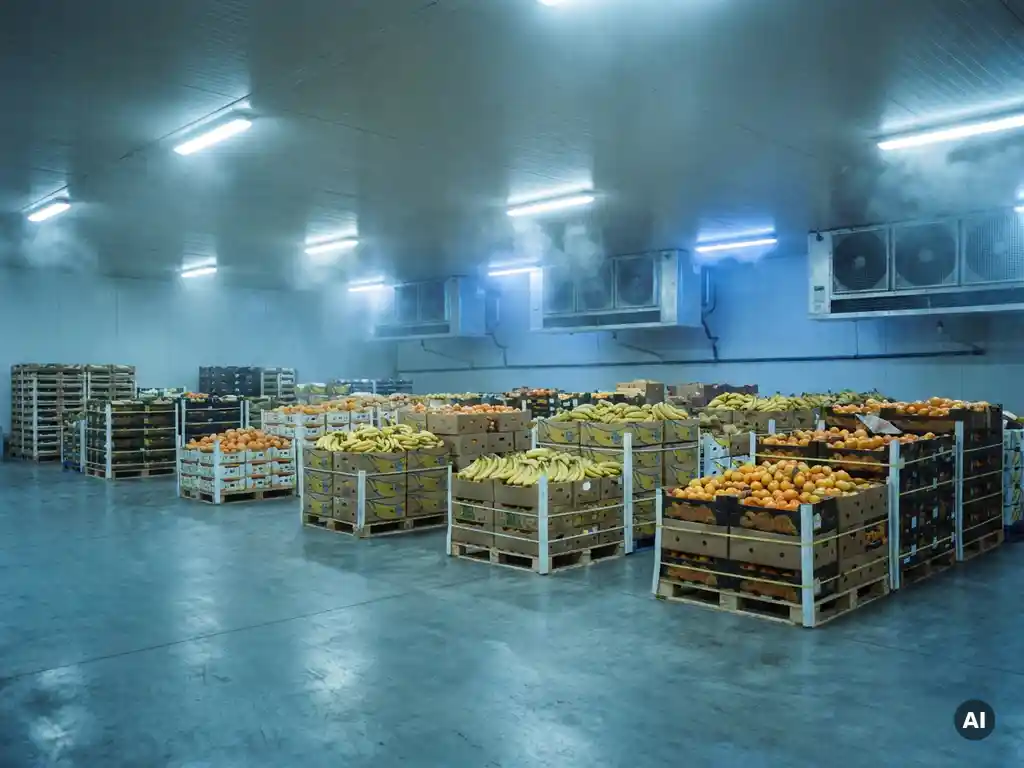
In practice, the costs of renting storage space range between €8 and €25 per pallet space per month, depending on the type of storage, location, and additional services. Rates for dry storage are generally lower than for climate-controlled cold storage. The exact price depends heavily on factors such as storage conditions, volume, lead time, and the service level of the logistics partner. In this article, we answer the most frequently asked questions about storage costs so that you can make an informed decision.
Which factors determine the price of storage space?
The price of renting storage space is determined by a combination of the type of storage, the location of the warehouse, the required volume, and the desired additional services. Each of these factors has a direct influence on the final rate you pay as a B2B client.
The main cost drivers listed:
- Type of storage: Dry storage (ambient or conditioned at approximately 11 degrees) is cheaper than refrigerated or frozen storage, because climate control requires less energy.
- Location: Warehouses near major ports such as Rotterdam or Antwerp are generally more expensive than locations further inland, but save on transport costs.
- Volume and utilization: The more pallet spaces you purchase, the more favorable the rate per unit. You pay relatively much for small volumes.
- Storage duration: Long-term contracts offer more certainty for the provider and often lead to lower monthly rates.
- Certifications: Certified facilities (such as BRC, SKAL, or KCB/NVWA) require investments in quality assurance, which is reflected in the price.
- Additional services: Quality control, repalletizing, labeling, and customs clearance are charged separately and increase the total costs.
Products requiring precise temperature and humidity control, such as exotic fruit, nuts, or seeds, demand special facilities. That specificity comes with a price tag, but it also prevents spoilage and loss of quality, which proves much more expensive in the long run.
What are the average costs per pallet for dry storage?
For dry storage, the average costs per pallet space per month in the Netherlands typically range between €8 and €15, depending on the volume, location, and service level. Dry storage at a conditioned temperature of approximately 11 degrees, suitable for nuts, peanuts, and seeds, may be slightly more expensive than fully uncooled storage.
Please note that these are base rates for the storage facility only. In practice, you also pay for inbound and outbound handling, administration, and any minimum purchases. Large-capacity warehouses, such as facilities with 12,000 or more pallet spaces, may be priced more competitively than smaller providers due to economies of scale.
For importers and wholesalers who regularly store large volumes, it pays to negotiate an all-in rate that also includes handling and administration. This provides greater cost transparency and prevents surprises on the invoice.
How does the price of cold storage differ versus dry storage?
Cold storage is structurally more expensive than dry storage, primarily due to higher energy consumption and technical requirements for the installations. While dry storage costs between €8 and €15 per pallet per month on average, rates for climate-controlled cold storage typically range between €15 and €25 or higher, depending on the required temperature range and humidity.
Why does cold storage cost more?
Cold storage requires continuous monitoring of temperature, humidity, and air circulation, 24 hours a day, 7 days a week. This calls for advanced systems, qualified personnel, and a higher energy bill. Moreover, the initial investments in refrigeration and freezing installations are significantly higher than for a standard dry warehouse.
When is cold storage the right choice?
Fresh and perishable products such as exotic fruit, citrus fruits, and bananas require cold storage to prevent loss of quality. In these cases, the premium compared to dry storage is far outweighed by the risk of spoilage, returns, or reputational damage among customers such as supermarkets or processing plants.
What are the additional costs when renting a storage unit?
In addition to the basic rate per pallet space per month, there are typically additional costs that can significantly increase the total price of renting storage space. It is essential to identify these items in advance when comparing providers.
Common additional costs are:
- Inbound and outbound handling: Unloading, loading, and moving goods are charged separately, often per operation or per pallet.
- Repalletization: If products need to be restacked or repacked, the provider charges a handling surcharge for this.
- Quality Control (QC): Inspections for damage, temperature measurements, and humidity checks upon arrival are valuable services, but are in addition to the storage rate.
- Labeling: The application of barcodes, expiration dates, or customer-specific labels is billed separately as a Value Added Service (VAS).
- Customs clearance and import inspection: For products entering via the port, costs for customs clearance and KCB/NVWA inspections apply.
- Transport and shuttle services: Picking up at the port or shuttling between the production location and the warehouse entails additional transport costs.
- Minimum purchases: Some providers apply a minimum monthly rate, regardless of the actual volume used.
A transparent quotation shows all these items separately. Always ask for a complete cost overview before signing a contract.
When is outsourced storage cheaper than an in-house warehouse?
Outsourced storage is almost always cheaper than having your own warehouse when you cannot guarantee a constant, high occupancy rate. Your own warehouse entails fixed costs, regardless of how much space you actually use. With an external partner, you only pay for what you use.
The break-even analysis depends on multiple variables:
- Volume and seasonal fluctuations: With fluctuating volumes, you contribute flexibly to the costs with an external provider. Your own property stands largely empty during periods of low occupancy, incurring full fixed costs.
- Investment costs: An in-house climate-controlled warehouse requires significant investments in installations, certifications, and maintenance. When outsourcing, you spread those costs between the provider and their other customers.
- Personnel and expertise: In-house storage requires trained personnel for handling, quality control, and administration. With outsourcing, that knowledge is included.
- Certifications: Obtaining and maintaining certifications such as BRC or SKAL is costly. A certified external partner takes over that responsibility.
For importers, wholesalers, and supermarket suppliers dealing with seasonal peaks or growing volumes, outsourced storage is typically the most cost-effective choice. This is especially true when handling, quality control, and customs clearance are also included.
How do you calculate the total storage costs for your product?
You calculate the total storage costs by multiplying the number of pallet spaces by the monthly rate and adding all additional costs per transaction. A simple calculation formula looks like this: (number of pallets x monthly rate) + (inbound and outbound transactions x rate per transaction) + VAS costs.
Follow these steps to arrive at a reliable cost estimate:
- Determine the average volume: How many pallets do you store on average per month, and what are the peak periods?
- Choose the right storage type: Dry storage, conditioned storage at approximately 11 degrees, or climate-controlled cold storage? Each type has a different rate.
- Map out the operations: How many inbound and outbound movements do you expect per month? Do you require repalletizing, labeling, or quality control?
- Request an all-in quote: Ensure that transport, customs, and certification costs are included in the comparison.
- Compare total costs, not just the base rate: A low pallet price can be misleading if handling and additional services are charged separately and expensively.
Also take indirect savings into account: reduced spoilage due to good climate control, fewer returns due to rigorous quality control, and time savings through integrated customs clearance lower the actual cost per unit of product.
How ZZColdstores helps with renting storage space
ZZColdstores offers B2B logistics partners a complete storage solution from its locations in Kruiningen and Vlissingen. Whether it concerns dry storage for nuts, peanuts, and seeds, or climate-controlled cold storage for exotic fruit, the facilities are designed for precise quality assurance and flexible capacity.
What ZZColdstores specifically offers:
- Dry storage warehouse with a capacity of 12,000 pallet spaces, with separate areas per product category
- Climate-controlled cold storage with 24/7 monitoring of temperature, humidity, and air circulation
- Quality control upon arrival, including temperature and humidity measurements and QC reports
- Repalletizing, labeling, and barcode-driven traceability per pallet
- Own quay in Vlissingen for direct transfer from ship to cold storage
- Import inspection via KCB/NVWA and customs clearance
- Shuttle transport within a radius of 40 km around Kruiningen
- Certifications: BRC, SKAL and Demeter
Would you like to know what renting storage space at ZZColdstores costs for your specific product flow and volume? Contact us for a customized quote, with no hidden costs.
Frequently Asked Questions
How long does it take on average for my goods to be stored after arrival at the port?
With a well-organized logistics partner like ZZColdstores, goods are typically received and stored within 24 to 48 hours of arrival at the port. The turnaround time depends on the availability of inspection bodies such as KCB/NVWA, the complexity of customs clearance, and the volume of the shipment. Preferably choose a provider with its own quay or close cooperation with the port to minimize delays.
What is a realistic minimum volume to make outsourced storage profitable?
There is no universal minimum volume, but in practice, outsourced storage is already profitable starting from just a few dozen pallets per month, especially when handling and additional services are included in the comparison. Keep in mind that some providers apply a minimum monthly rate, regardless of the actual volume used. Always explicitly ask about this when requesting a quote to avoid surprises during periods of low occupancy.
What common mistakes should I avoid when comparing quotes for storage space?
The most common mistake is comparing only the base rate per pallet space, without taking into account inbound and outbound handling, minimum purchases, and additional services such as quality control or labeling. A low pallet price may seem attractive at first glance, but the total bill can turn out to be significantly higher than with a provider offering a slightly higher base price but inclusive services. Always request a detailed all-in quote and calculate the total monthly costs based on your actual volume and operations.
Can I flexibly scale storage capacity up and down during seasonal peaks?
Yes, most professional logistics service providers offer flexible contract models that allow you to adjust capacity to seasonal fluctuations, without paying for a fixed number of pallet spaces year-round. This is one of the biggest advantages of outsourced storage compared to owning your own warehouse. When concluding a contract, explicitly discuss the terms regarding scaling up and down, including any notice periods or reservation fees for peak periods.
How do I know if a storage partner has the right certifications for my product?
First, determine which certifications are legally mandatory or commercially required for your product and customers. For organic products, SKAL certification is essential; for food products destined for supermarkets, BRC is often a strict requirement from the retailer; and for imported plant-based products, KCB/NVWA inspection is legally mandatory. Ask the supplier for current certificates and verify their validity, as expired certifications can lead to rejections, fines, or breach of contract with your customers.
What happens if my products do not meet the quality requirements upon arrival?
A professional storage partner performs a quality control upon arrival and records deviations in a QC report, including photos and temperature and humidity measurements. Based on this report, you can take timely action, such as filing a claim with the carrier, informing the supplier, or taking corrective measures such as repalletization. Ensure that you agree in advance on the procedures applicable to rejected batches, who bears the costs, and how quickly you, as the client, will be informed.
How far in advance do I need to reserve storage capacity, and what are the contract terms?
For structural storage needs, it is advisable to contact a logistics partner at least four to eight weeks in advance so that sufficient capacity can be reserved and the contract can be finalized on time. For urgent requests, this is sometimes possible sooner, but then you run the risk that the desired capacity or the right storage type is not available. Contract durations vary from month-to-month agreements to annual contracts; longer contracts generally result in a more favorable rate but require more certainty regarding your future volumes.
Related articles
- How does cold storage help limit quality loss of fresh products?
- How do inbound and outbound work within warehousing?
- What data is recorded during the storage of foodstuffs?
- What happens to goods between arrival and departure from a warehouse?
- What happens to nuts that are stored at too high a temperature during transport?