
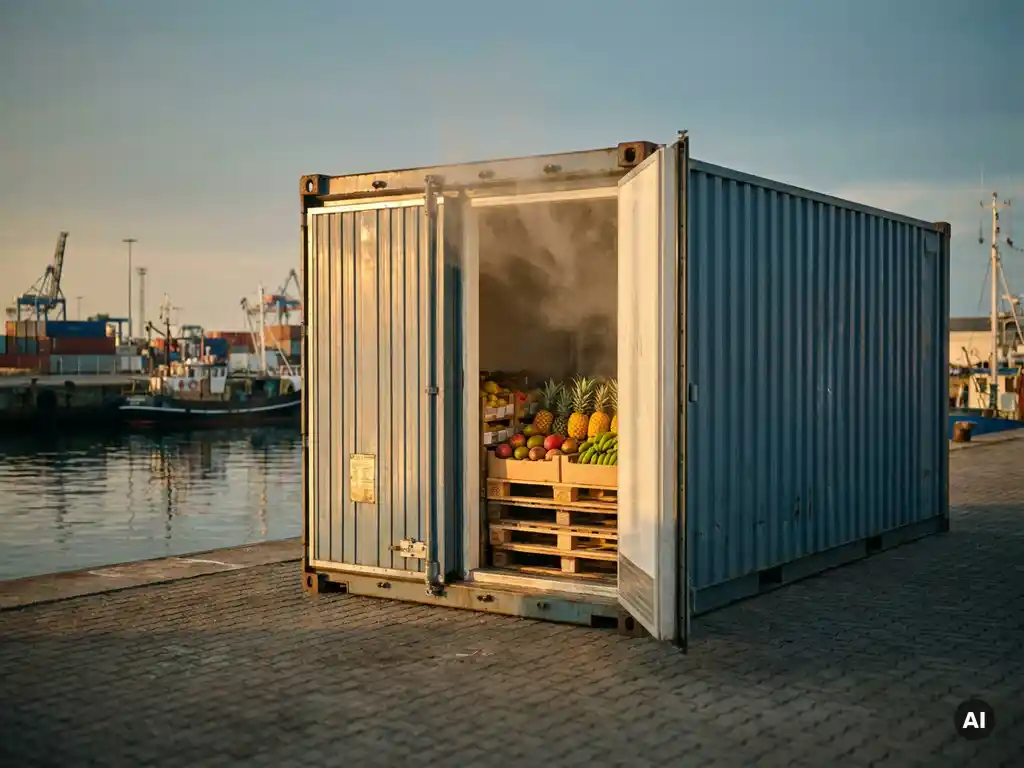
You can rent a temporary cold storage unit through specialized cold storage and logistics companies in the Netherlands, such as regional cold stores, port-related storage companies, and logistics service providers with climate-controlled warehouses. For B2B parties transporting fresh or fragile products, the best option is usually a fixed cold storage location with flexible contract forms, rather than a mobile refrigerated container. The questions below will help you choose the right partner and approach.
What are the costs of renting a temporary cold storage unit?
The cost of renting a temporary cold storage unit varies widely and depends on the required storage capacity, the temperature zone, the contract duration, and the location. For B2B parties, rates typically apply based on the number of pallet spaces per week or month, supplemented by costs for additional services such as loading, unloading, and quality control.
Factors that determine the price include:
- Capacity: The number of pallet spaces or cubic meters you need is the main cost driver.
- Temperature zone: Refrigerated storage (for example, between 8 and 14 degrees for citrus fruits) generally costs more than dry storage at room temperature.
- Contract duration: Short-term or seasonal rentals are generally more expensive per unit than a long-term agreement.
- Additional services: Repalletization, quality control, labeling, and transport increase total costs but also add direct value to your logistics chain.
Always request a customized quote from the storage partner so that you can make a fair comparison based on your specific product type and volume.
Where can you rent a temporary cold storage unit in the Netherlands?
In the Netherlands, you can rent a temporary cold storage unit from specialized cold storage companies, port-related logistics service providers, and regional storage companies with climate-controlled facilities. Important hubs are the regions around Rotterdam, Antwerp, Vlissingen, and Kruiningen, which connect directly to the international supply routes for fresh products.
The Rotterdam-Antwerp corridor is particularly relevant for importers and wholesalers of fresh fruit, vegetables, and nuts. Companies in this corridor combine cold storage with port logistics, container handling, and customs clearance, allowing the entire chain from arrival to delivery to be handled at a single location. This limits transport movements and reduces the time products spend outside controlled conditions.
When comparing providers, also look for certifications such as BRC, SKAL, or KCB/NVWA approval, as these are often a requirement from buyers such as supermarket purchasing organizations or processing plants.
Which temperature zones are available at cold storage rental companies?
Cold storage rental companies typically offer multiple temperature zones, ranging from lightly cooled (approximately 8 to 15 degrees Celsius) for products such as citrus fruits and bananas, to standard cooling (0 to 7 degrees) for vegetables and other fresh products, and freezer storage (below zero degrees) for frozen products.
Specific temperature requirements apply to exotic fruit that differ from standard cold storage:
- Bananas: Are stored at approximately 13 to 14 degrees Celsius to control ripening.
- Citrus fruits: Generally require a temperature between 8 and 12 degrees, depending on the variety.
- Dry products such as nuts and seeds: Are stored in dry storage at approximately 11 degrees, without the high humidity of a cold room.
In addition to temperature, humidity control also plays a major role. Fresh and delicate products require a precisely controlled climate where temperature, humidity, and air circulation are continuously monitored. Always ask a potential partner which climate parameters they can guarantee per zone.
What is the difference between renting a cold room and renting dry storage?
The main difference between renting a cold room and renting dry storage is temperature and humidity control. A cold room keeps products actively cooled, often with strict humidity control, while dry storage offers a stable ambient temperature without active cooling, typically around 11 degrees Celsius.
Dry storage is suitable for products that do not require low temperatures but must be protected against moisture, heat, and temperature fluctuations. Examples include nuts, peanuts, seeds, and dried food products. Cold storage is necessary for fresh products where spoilage or loss of quality occurs immediately at excessively high temperatures, such as fresh fruit and vegetables.
From a cost perspective, dry storage is generally cheaper than climate-controlled cold storage, because the energy costs for active cooling are eliminated. For supply chain managers, it is important to choose the right storage method for each product category, as incorrect storage leads to quality loss, rejects at customers, and unnecessary costs.
What should you look out for when choosing a cold storage partner?
When choosing a cold storage partner, the key considerations are: available certifications, the flexibility of the climate control system, the location relative to supply and delivery routes, and the additional services the partner can offer beyond pure storage.
Concrete criteria for assessment:
- Certifications: BRC, SKAL, and KCB/NVWA are often required by customers. Check whether the storage partner holds the required certificates for your product type.
- Location and accessibility: A partner close to the port or with its own quay saves transport time and reduces the risk of quality loss during transshipment.
- Traceability: Barcode-driven systems that register every pallet from arrival to departure are essential for food safety and customer reporting.
- Flexibility: Can the partner adapt to fluctuating volumes, seasonal peaks, or specific product specifications?
- Additional services: Quality control upon arrival, repalletizing, labeling, and customs clearance at the same location reduce links in the chain.
During an initial meeting, always ask about the 24/7 climate monitoring and the way in which deviations are detected and communicated.
How quickly can a temporary cold storage unit be operational?
At an established cold storage company with existing capacity, a temporary cold storage solution can typically be operational within a few working days to a week, depending on the availability of pallet spaces and the required contractual agreements. Mobile refrigerated containers can sometimes be deployed faster, but offer less climate control and are less suitable for sensitive food products.
For B2B parties working with fresh products and fixed supply rhythms, it is wise not to wait until there is an acute storage shortage. A good cold storage partner helps with capacity planning and can respond flexibly to sailing schedules or seasonal peaks, provided timely consultation takes place.
Factors influencing lead time include concluding a processing agreement (mandatory for food storage), setting up system connections for inventory management, and aligning inbound processes such as quality control and repalletization.
How ZZColdstores helps with cold storage
ZZColdstores offers B2B partners a complete solution for climate-controlled cold storage of fresh and perishable products, with locations in Kruiningen and Vlissingen. The facilities are specifically designed for products such as bananas and citrus fruits that require precise temperature and humidity control.
What ZZColdstores specifically offers:
- 24/7 climate monitoring of temperature, humidity, and air circulation
- Flexible climate settings per zone, tailored to the specific requirements of your product
- Own quay in Vlissingen for direct transfer from ship to cooling
- Barcode-driven traceability of every pallet, from arrival to departure
- Quality control upon arrival, repalletizing, labeling and shuttle transport
- Certifications: BRC, SKAL and KCB/NVWA
Would you like to know if ZZColdstores is the right partner for your cold storage, or do you have a specific question about capacity and availability? Contact us and discuss the possibilities directly with the team.
Frequently Asked Questions
As a small importer or self-employed professional, can I also use a cold storage company, or is that only for large batches?
Most specialized cold storage companies focus primarily on B2B clients, but that does not mean you need a large volume to make use of their services. Many providers work with flexible contract forms where you pay per pallet space, giving smaller importers or start-up traders access to professional cold storage as well. It is advisable to discuss your expected volume and delivery frequency immediately during the first contact so that the partner can make a suitable proposal.
What happens if the temperature in the cold room deviates from the agreed values during storage?
A professional cold storage partner has a 24/7 monitoring system that triggers an immediate alarm in the event of temperature deviations, allowing for swift intervention before products are damaged. When signing a contract, always ask about the emergency protocol: who is called, how quickly is action taken, and how is the deviation documented? Good partners maintain temperature logs that you can use as evidence for customers or in the event of an insurance claim.
Do I have to enter into a minimum contract duration, or is short-term cold storage also possible?
Short-term cold storage is available at most specialized companies, but you generally pay a higher rate per pallet space than for a long-term agreement. Some providers offer seasonal contracts, which is interesting if your product flows vary significantly by quarter or harvest season. Also, discuss notice periods and any minimum purchase requirements per period in advance to avoid unexpected costs due to lower volumes than planned.
How can I be sure that my products meet the requirements of my customers, such as supermarkets or processing plants, during storage?
The assurance lies in a combination of the storage partner's appropriate certifications (such as BRC, SKAL, or KCB/NVWA approval) and the availability of detailed reports on climate conditions and traceability per pallet. Many large customers require their suppliers to use only certified storage locations, so check in advance which certificates your specific customers require. Also, ask whether the storage partner is audit-ready and whether they offer support during inspections by retailers or certifying bodies.
What is the difference between a mobile refrigerated container and a fixed cold storage location, and when should I choose which option?
A mobile refrigerated container is flexible to deploy and can be set up quickly, but offers more limited climate control, fewer monitoring options, and is less suitable for sensitive food products that require precise temperature and humidity control. A fixed cold storage location offers more stable conditions, professional guidance, additional services, and the certifications typically required by customers. For occasional storage of non-critical products, a container may suffice, but for structural storage of fresh fruit, vegetables, or other fragile products, a specialized cold store is almost always the better choice.
How do I arrange customs clearance if my products are delivered directly from abroad to the cold storage location?
Many specialized cold storage companies in port regions such as Rotterdam, Vlissingen, and Antwerp offer customs clearance as part of their services or work closely with a dedicated on-site customs broker. This is a major advantage, as products can then be stored under customs supervision immediately upon arrival from the ship without additional transport movements. Ask the provider specifically whether they have a bonded warehouse or AEO status, and whether they have experience with your product category and country of origin.
What information do I need to provide to receive an accurate quote for cold storage?
To receive a meaningful quotation, it is important to provide at least the following information: the type of product and the required temperature zone, the expected volume in pallet spaces or cubic meters, the delivery frequency and desired storage duration, and any additional services you require, such as quality control, repalletization, or transport. The more specific you are regarding your product specifications and logistical requirements, the better the storage partner can calculate a suitable and fair price. Also, include any seasonal peaks in your request so that the partner can take these into account in their capacity planning.
Related articles
- How much does it cost to rent a storage unit per month?
- Why is humidity just as important as temperature in dry storage?
- How does the traceability of dry raw materials work in a European warehouse?
- What is buffer storage and how does it help your factory run stably?
- What is the difference between ambient storage and cold room storage for food?