
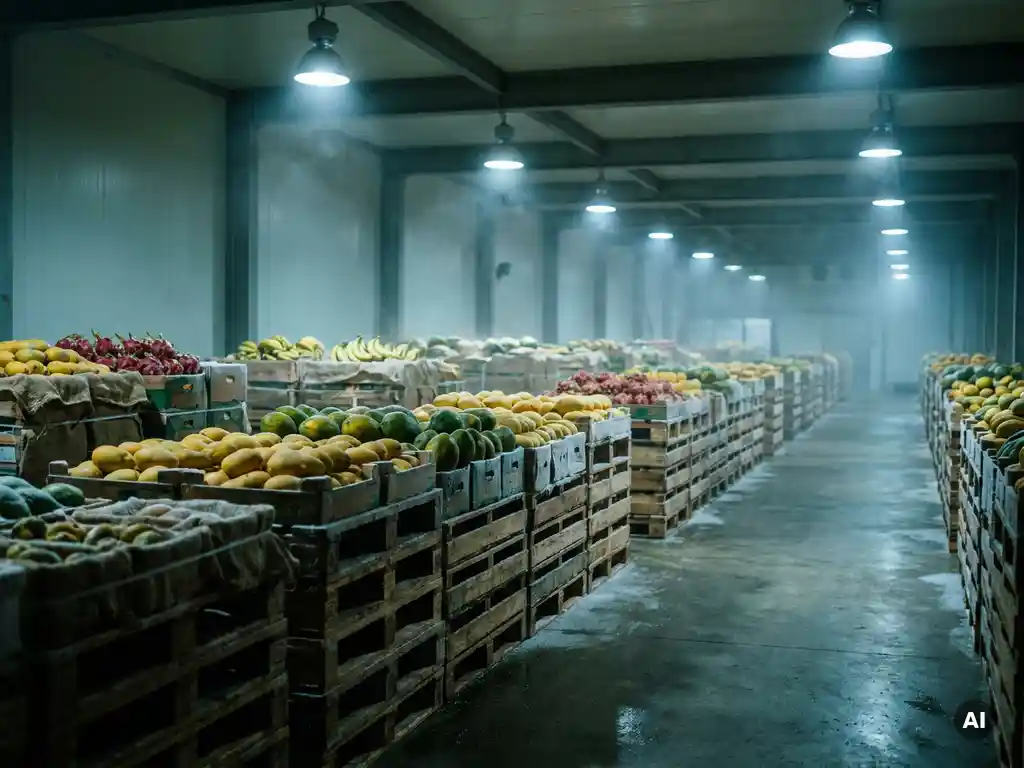
Buffer storage is the temporary storage of raw materials, semi-finished products, or finished products at a point in the production chain where supply and demand are not precisely aligned. For factories, it acts as a safety margin: if supply temporarily stalls or production peaks, a buffer prevents the line from coming to a standstill. This article answers the most frequently asked questions about buffer storage for production environments, from the various forms to choosing the right location.
How does buffer storage prevent downtime in a production process?
Buffer storage prevents downtime by creating a stock cushion between successive steps in the production process. When the supply of raw materials slows down, a machine breaks down, or sales temporarily lag, the buffer absorbs the shock. The production line does not have to wait for the next delivery and can continue operating on the stock that is already available.
In practice, this works in two ways. On the incoming side, an incoming buffer ensures that sufficient raw material or semi-finished product is ready before production begins. On the outgoing side, an outgoing buffer holds finished products until transport or further processing is complete. Together, these buffers ensure a consistent lead time and reduce the risk of costly production interruptions.
This is particularly crucial for companies working with seasonal raw materials. Fruit, vegetables, and other fresh products become available in large quantities within a limited time window. Without buffer storage, the factory would be dependent on daily deliveries, with all the associated risks associated with transport delays or harvest peaks.
What types of buffer storage exist?
There are three main forms of buffer storage, each suitable for a different phase in the production process and a different type of product. The choice depends on the nature of the goods, the desired storage duration, and temperature sensitivity.
- Refrigerated buffer storage: Intended for fresh, temperature-sensitive products such as exotic fruit, vegetables, and dairy. Temperature and humidity are precisely controlled to minimize quality loss.
- Dry buffer storage (ambient): Suitable for products that do not require refrigeration, such as nuts, seeds, peanuts, and packaged food products. Stable environmental conditions are key here.
- Freezer storage: For products that must be stored for extended periods at sub-zero temperatures, such as frozen vegetables or frozen products.
In addition to these temperature categories, a distinction is also made by location: buffer storage can take place on the factory premises itself (internal buffer) or be outsourced to an external storage partner (external buffer). External buffer storage is particularly interesting when the in-house storage capacity is insufficient or when the storage location is logistically more favorable than the factory site itself.
What is the difference between buffer storage and regular storage?
The core difference lies in the purpose and the lead time. Regular storage is intended for the long-term preservation of larger inventories, whereas buffer storage is specifically designed as a temporary link in an active production or logistics process. Buffer storage is dynamic: goods flow through it quickly; regular storage is more static in nature.
With regular storage, the emphasis is on capacity and cost efficiency over a longer period. With buffer storage, the focus is on speed, availability, and flexibility. The location of a buffer storage point is deliberately chosen based on production planning and the logistics flow, not solely on the basis of available square meters.
Another distinction lies in the integration with planning. Buffer storage is directly linked to production demand: inventory is replenished and reduced based on signals from the production process. Regular storage functions more independently of daily production and more often serves as seasonal storage or strategic inventory for the longer term.
When does a factory need buffer storage?
A factory requires buffer storage as soon as a structural imbalance exists between the moment of supply and the moment of processing or sale. This occurs in several situations: with seasonal raw materials, with long supply lines (for example, imports from overseas markets), with irregular production capacity, or with fluctuating customer demand.
Concrete signs that buffer storage offers a solution:
- The production line is regularly at a standstill due to late or irregular deliveries of raw materials.
- Finished products are piling up because transport or customers are not available on time.
- The factory works with imported products that arrive in large batches and must be processed over a longer period.
- There are seasonal peaks where supply temporarily exceeds processing capacity.
- Loss of quality occurs because products are left waiting in the wrong place or under the wrong conditions for too long.
The sooner a factory sets up buffer storage, the smaller the risk of disruptions in the supply chain and quality problems with the final product.
How do you choose the right buffer storage location?
The right buffer storage location combines three factors: geographical proximity to the supply source or production point, the right storage conditions for the product, and good connections to transport. A location that is logistically favorable but does not offer proper climate control is unsuitable for temperature-sensitive products.
Consider the following when making your choice:
- Proximity to port or point of supply: The shorter the distance from the ship or truck to the cooling facility, the better the quality of fresh products is preserved.
- Climate control: Check if the location can provide the necessary temperature and humidity settings that your product requires.
- Flexible capacity: Choose a partner who can scale with seasonal fluctuations in your supply or production.
- Logistical integration: Good connections with road transport and preferably also waterborne transport increase the efficiency of the entire chain.
- Certifications: For food products, quality certifications such as BRC are relevant to meet the requirements of supermarkets and other major buyers.
External buffer storage near a port is often the most logical choice for importers of fresh products, because the time between unloading and cooling is kept as short as possible.
What are the costs of buffer storage for a factory?
The costs of buffer storage depend on the type of storage, the required capacity, the storage duration, and the location. Refrigerated storage is more expensive than dry storage due to the energy costs for climate control. External buffer storage with a specialized partner is typically calculated per pallet space per week or per month, depending on the agreements.
In addition to direct storage costs, there are indirect cost benefits that make buffer storage attractive. A production line that does not shut down yields more than the savings achieved by not maintaining buffer space. Moreover, loss of quality due to poor storage conditions leads to rejects and spoilage, making the costs of insufficient buffer storage visible.
For factories processing imported products, it is also relevant to calculate the costs associated with maintaining storage capacity in-house versus outsourcing it. Outsourcing to an external dry storage partner makes costs variable and avoids investments in own warehouse capacity, which remains largely unused outside of peak seasons.
How ZZColdstores helps with buffer storage for food products
ZZColdstores offers buffer storage solutions for factories and supply chain partners working with fresh or dry food products. From locations in Kruiningen and Vlissingen, with a private quay directly next to the cold storage facility in Vlissingen, the transfer from ship to storage is minimal. That is exactly what fragile products need to maintain their quality.
What ZZColdstores offers for buffer storage:
- Refrigerated storage with precise temperature and humidity control, tailored to the specific product
- Dry storage with a capacity of 12,000 pallet spaces for nuts, peanuts, seeds, and other dry food products
- Flexible capacity that moves with ship sailing schedules and the customer's production planning
- Certifications including BRC, SKAL, and Demeter, relevant for suppliers to supermarkets and the processing industry
Would you like to know how buffer storage makes your production process more stable? Contact ZZColdstores for a discussion about the options that suit your logistics situation.
Author: Frans van der Maas, Operations Director ZZColdstores
Frequently Asked Questions
How long can a product be kept in buffer storage before its quality deteriorates?
That depends entirely on the type of product and the storage conditions. Fresh products such as exotic fruit or vegetables typically have a buffer period of a few days to a few weeks under the right refrigerated conditions. Dry products such as nuts, peanuts, and seeds can be stored for months under stable ambient conditions without loss of quality. It is advisable to establish product-specific guidelines regarding maximum storage duration, temperature, and humidity together with your storage partner.
What is the biggest mistake factories make when setting up buffer storage?
The most common mistake is underestimating the required capacity during seasonal peaks. Factories often calculate their buffer space based on average supply, but not on peak moments—precisely when buffer storage is needed most. A second common mistake is choosing a location that seems logistically attractive but does not offer the right climate control for the specific product. Always align capacity planning with your busiest season, not the annual average.
As a small or medium-sized factory, can I also make use of external buffer storage, or is that only for big players?
External buffer storage is often the most cost-effective solution, especially for small and medium-sized factories. Instead of investing in your own cooling capacity that remains largely empty during the off-season, with an external partner you only pay for the pallet spaces you actually use. Many specialized storage partners work with flexible contracts that scale with your volume, so you do not have fixed overhead costs for capacity you do not need.
How do I integrate buffer storage into my existing production planning and ERP system?
A good external warehousing partner offers insight into inventory movements via a digital portal or direct integration with common ERP systems. Based on real-time inventory data, you can automatically align replenishment orders and production planning with the available buffer stock. Start practically: first, determine the minimum and maximum buffer limits per raw material or semi-finished product, and then, together with your warehousing partner, set a reporting frequency that matches the throughput speed of your products.
Which certifications should I check when choosing a buffer storage partner for food products?
For food products, BRC (British Retail Consortium) and IFS (International Featured Standards) are the most requested certifications by supermarkets and large buyers. If you work with organic products, SKAL certification and possibly Demeter recognition are required. Also check whether the storage partner complies with HACCP guidelines and ask for the most recent audit results — a certification is only valuable if it is current and independently verified.
What happens if the buffer storage capacity is full during an unexpected supply peak?
This is a real risk that you should preferably cover contractually before it occurs. Discuss with your storage partner which overflow solutions are available, such as temporary expansion to a second location or prioritizing existing inventory based on expiration date. Some specialized partners work with a network of locations, ensuring extra capacity is quickly available. Also, establish the procedure for emergencies so that your supply chain does not grind to a halt when you need it most.
Is it sensible to combine buffer storage with additional logistics services such as repackaging or quality control?
Absolutely — many factories extract extra value from their buffer storage location by linking value-added services to it. Think of sampling and quality checks upon arrival, repackaging into production-ready sizes, or labeling for specific customers. By combining these operations with buffer storage at a single location, you save on transport and handling costs and reduce the risk of quality loss due to additional transfer points.
Related articles
- When is climate-controlled cold storage necessary?
- How does inventory tracking work within a warehouse?
- How does packaging quality affect the shelf life of dried fruit?
- What is the difference between ambient storage and room temperature storage?
- What is the difference between floor-loaded and palletized containers?