
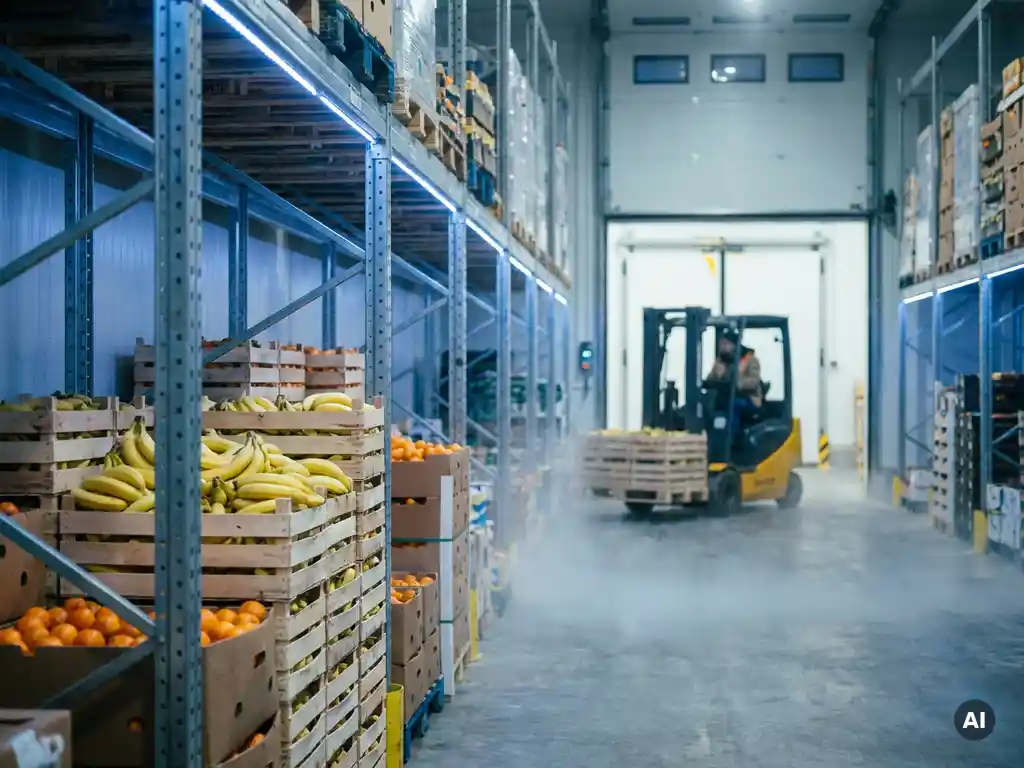
A warehouse is a storage facility designed to store goods over a longer period, whereas a distribution center is primarily set up to quickly forward products to customers or stores. The difference lies in the core function: storage versus distribution. For logistics managers and importers, this distinction determines which type of facility best aligns with their supply chain.
The choice between a warehouse and a distribution center depends on factors such as product type, lead time, temperature requirements, and the position in the logistics chain. The following questions elaborate on each aspect in concrete terms.
What functions does a warehouse have that a distribution center does not?
A warehouse offers long-term, controlled storage of goods without continuous flow. While a distribution center operates on speed and throughput, a warehouse is designed for preservation, quality maintenance, and flexible storage duration. This makes it suitable for products awaiting inspection, seasonal peaks, or further processing.
Specific functions that distinguish a warehouse from a distribution center:
- Long-term storage of goods without a fixed delivery date
- Climate control tailored to specific product categories, such as refrigerated or dry storage
- Space for import inspections and customs clearance before further shipment
- Flexible storage duration that aligns with ship sailing schedules or the customer's rhythm
- Separate storage areas for different product types, such as nuts, seeds, or fresh fruit
A distribution center typically lacks the infrastructure for specialized climate control or long-term storage. It is designed for high throughput, not for maintaining quality over time.
What exactly does a distribution center do?
A distribution center receives goods, processes them quickly, and forwards them to final destinations such as stores, customers, or other links in the supply chain. The emphasis is on efficient flow: products remain in the center for the shortest possible time. Typical activities include sorting, repackaging, consolidating, and shipping.
In practice, a distribution center operates with tight time windows and high volumes. It is designed for operational speed and standardization. For products requiring precise temperature control or longer storage times, a distribution center is less suitable than a specialized storage facility.
When do you choose a warehouse instead of a distribution center?
A warehouse is the better choice when products require a longer shelf life, have specific climate requirements, or are awaiting inspection and customs clearance. For importers of fresh food products, wholesalers with seasonal peaks, or companies buffering goods between production and sales, a warehouse offers more control and flexibility than a distribution center.
Concrete situations in which a warehouse is preferred:
- Import goods that require inspection or customs clearance before moving further up the chain
- Fresh or delicate products that require precise temperature and humidity control
- Seasonal stocks that are temporarily buffered before delivery
- Bulk goods such as nuts, seeds, or dry food products stored on pallets
- Logistical chains where the sailing schedule of seagoing vessels determines the delivery date, not a fixed lead time
A distribution center is better suited to standardized products with a predictable, high throughput to regular customers.
How does cold storage differ from regular warehouse storage?
Cold storage, also cold storage or climate-controlled storage, is a specialized form of warehouse storage in which temperature, humidity, and air circulation are continuously monitored and regulated. Regular warehouse storage, also known as dry or ambient storage, takes place at room temperature without active climate control. The difference lies in the technical infrastructure and the product categories for which each type is suitable.
In cold storage, environmental conditions are precisely tailored to the specific requirements of the product. Fresh fruit, vegetables, and other perishable products quickly lose quality if the temperature or humidity deviates from optimal values. Cold storage extends shelf life and preserves quality throughout the entire storage period.
Regular warehouse storage is suitable for products that are not sensitive to temperature fluctuations, such as dry food products, packaging materials, or non-food items. Operational costs are lower, but the application possibilities are more limited for fresh or perishable goods.
What is the difference between dry storage and refrigerated storage?
Dry storage, also known as ambient storage or dry warehousing, stores goods at room temperature in a dry environment without active cooling. Refrigerated storage keeps products at a specific, controlled temperature that is typically below room temperature. The distinction determines which products remain shelf-stable and which storage facility is the right choice from a logistical perspective.
Dry storage is suitable for products such as nuts, peanuts, seeds, and other dry food products that remain stable at ambient temperature. Refrigerated storage is necessary for fresh fruit, citrus fruits, and other products that spoil quickly at higher temperatures. In modern storage facilities, the two types are often housed in separate rooms to ensure that products with different requirements do not come into contact with each other.
What role does the location of a warehouse play in the logistics chain?
The location of a warehouse largely determines the efficiency of the logistics chain. A warehouse situated directly at a port, terminal, or transshipment point reduces transport time between unloading and storage to a minimum. This is crucial for fresh and perishable products, where every minute outside the controlled environment affects quality.
For importers and supply chain managers, port locations are strategically valuable because they combine multiple logistical steps: unloading, storage, inspection, customs clearance, and loading can all take place at or near the same location. This reduces transport movements, lowers the risk of quality loss, and accelerates lead times in the chain.
Warehouses in domestic locations offer other advantages, such as proximity to processing plants or distribution networks. The optimal choice depends on the company's position in the supply chain and the nature of the goods being stored.
How ZZColdstores helps with warehouse and storage challenges
ZZColdstores combines refrigerated and dry storage solutions at strategic port locations in Kruiningen and Vlissingen. For importers and logistics managers working with fresh fruit, nuts, seeds, or other food products, this offers direct added value in the supply chain.
What ZZColdstores specifically offers:
- Climate-controlled storage for delicate products such as bananas and citrus fruits, with 24/7 monitoring of temperature, humidity, and air circulation
- Dry storage warehouse with a capacity of 12,000 pallet spaces, with separate areas for nuts, peanuts, and seeds
- Private quay in Vlissingen for direct transshipment from the ship to cooling, with minimal exposure to external conditions
- Flexible storage duration tailored to the sailing schedule of seagoing vessels and the client's wishes
- Assistance with import inspection and customs clearance as part of the logistics process
Would you like to know which storage solution best fits your logistics chain? Contact ZZColdstores for a consultation with one of our specialists.
Frequently Asked Questions
Can I temporarily store my goods in a warehouse while I wait for a buyer?
Yes, that is precisely one of the strongest applications of a warehouse. Unlike a distribution center, a warehouse is designed for flexible storage duration, without the need for a fixed delivery date. This is ideal for importers who want to buffer their goods until market conditions or the buyer are ready.
What are the most common mistakes made when choosing between a warehouse and a distribution center?
A common mistake is choosing a distribution center for products that actually require long-term or specialized storage, such as fresh food products or seasonal stock. This leads to a loss of quality and higher costs due to unnecessary transport movements. Another common mistake is underestimating the importance of location: a facility far from the port can significantly extend lead times for perishable goods.
How do I know what temperature and humidity my product needs during storage?
Optimal storage conditions are typically set out in the supplier's product specifications or in international guidelines for the relevant product category, such as Codex Alimentarius standards for food products. A specialized storage facility like ZZColdstores can advise you based on the type of product and the desired storage duration. It is advisable to record these conditions in writing in advance in a storage agreement.
Is it possible to combine both refrigerated and dry storage with a single provider?
Yes, modern specialized storage facilities often offer both types of storage under one roof or at a single location. This is logistically efficient because products with different requirements, such as fresh fruit and dried nuts, can be stored and managed by the same provider. It reduces the number of transport movements and significantly simplifies administrative and logistical coordination.
How does the customs clearance process work at a warehouse at a port location?
At a warehouse located at a port, goods can be stored in a bonded warehouse immediately after unloading, after which customs clearance takes place while the products are kept safe and refrigerated. This prevents goods from waiting unnecessarily long outside a controlled environment for administrative processing. Many specialized port warehouses, including ZZColdstores, offer guidance during this process as part of their services.
What should I ask when selecting a warehouse for my import goods?
In any case, ask about the available storage capacity and types (refrigerated, dry, or both), the location relative to the port or terminal, the options for customs clearance and import inspections, and the flexibility regarding storage duration. Also inquire about the monitoring of temperature and humidity: is this monitored 24/7 and are alarm systems in place? Finally, it is advisable to ask for references with product categories similar to yours.
What are the cost advantages of storing in a warehouse near the port compared to an inland location?
A port warehouse eliminates an extra transport step between unloading the ship and storage, resulting in direct savings on transport costs and loading time. For perishable products, this is also a quality advantage: less time outside the controlled environment means less quality loss and lower write-offs. In the long term, these savings can be substantial, especially with large volumes or frequent imports.
Related articles
- How does pallet storage for food work?
- What is the difference between ambient storage and room temperature storage?
- What is conditioned storage at a temperature of 11°C?
- What are the requirements for ambient storage of pistachios in Europe?
- What is the difference between ambient storage and cold room storage for food?