
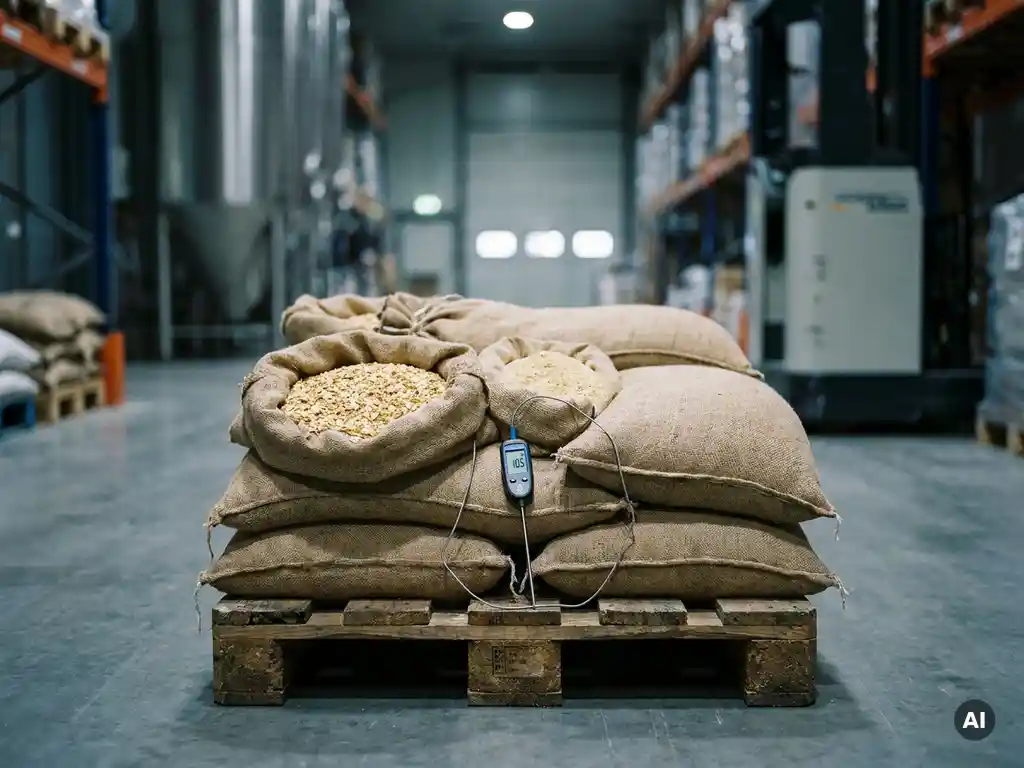
The recommended storage temperature for potato flakes and potato powder is between 10 and 20 degrees Celsius, in a dry, dark, and well-ventilated room. Humidity is at least as important as temperature: a relative humidity below 65% prevents clumping, mold formation, and loss of quality. These guidelines apply to both large-scale industrial storage and intermediate storage in the logistics chain.
Potato powder and flakes are dehydrated products that are more sensitive to environmental influences than their dry nature suggests. Heat, moisture, and light accelerate the degradation of taste, color, and texture. In this article, we answer the most frequently asked questions about proper storage conditions, common storage mistakes, and when additional climate control is necessary.
How does temperature affect the quality of potato flakes and powder?
Temperature has a direct influence on the chemical stability of potato flakes and potato powder. At higher temperatures, the oxidation of fats and starch accelerates, leading to a rancid aroma, discolored granules, and an off taste. Even at sustained temperatures above 25 degrees Celsius, the quality deteriorates noticeably, even if the product is well packaged.
Powdered potato naturally contains residual starch, sugars, and traces of fat. When heated, these components react via the Maillard reaction: a chemical interaction between sugars and amino acids that causes browning. This is the same process that occurs when baking bread, but it is undesirable during storage because it negatively affects the color and taste of the final product.
Temperature fluctuations are a second risk factor. When the storage area alternates between warm and cold, condensation forms on the inside of packaging. This moisture activates the hygroscopic properties of the powder: it attracts moisture, clumps together, and provides a breeding ground for microbiological growth. Constant temperatures are therefore at least as important as the correct temperature limit.
What is the recommended storage temperature for potato flakes and powder?
The optimal storage temperature for potato flakes and potato powder is 10 to 20 degrees Celsius, combined with a relative humidity of no more than 60 to 65%. Within this range, the chemical composition remains stable, clumping is prevented, and the microbiological load remains low. Temperatures below 10 degrees are not harmful, but increase the risk of condensation when moved to warmer rooms.
For industrial batches stored on pallets, additional points of attention apply:
- Never store pallets directly on a cold concrete floor; use pallet feet or grids to allow air circulation under the load.
- Maintain sufficient distance from exterior walls, which can act as thermal bridges during temperature fluctuations.
- Ensure continuous ventilation in the storage area to prevent moisture buildup.
- Avoid storing near heating elements, pipes, or direct sunlight.
Furthermore, products intended for the food industry must comply with the requirements of the HACCP system. This means that temperature and humidity are recorded and documented as part of the quality assurance system.
What is the difference between dry storage and cold storage for potato powder?
In most cases, potato powder requires dry storage at ambient temperature, not refrigerated storage. The product is dehydrated and does not require refrigeration to inhibit microbiological growth, as long as humidity remains low. Cold storage is rarely necessary for potato powder and can even be detrimental if the risk of condensation upon removal is not properly controlled.
The distinction between the two forms of storage is relevant for logistics partners:
- Dry storage (ambient): suitable for dehydrated products such as potato powder and flakes. The focus is on humidity control, ventilation, and temperature stability within the ambient range.
- Cold storage: intended for fresh or perishable products requiring active temperature reduction, such as fresh fruit or products with a short shelf life. For potato powder, this adds no value in most cases.
An exception may occur during long-term storage in warm climates or for products with a high residual fat content, where a slightly cooled environment slows down oxidation. In such cases, consultation with the storage partner regarding the specific product specifications is recommended.
How long do potato flakes and powder last with proper storage?
When stored correctly—i.e., dry, cool, and dark at a temperature of 10 to 20 degrees Celsius and a humidity below 65%—potato flakes and potato powder have a shelf life of 12 to 24 months. The exact shelf life depends on the packaging, the fat content of the product, and the quality of the raw material during processing.
Hermetically sealed packaging with a nitrogen atmosphere or oxygen absorbers significantly extends shelf life, as oxidation is virtually completely prevented. Once opened, packages are more susceptible to moisture absorption and must be processed or resealed as soon as possible.
For large-scale storage in big bags or bulk packaging, regular random checks for color, odor, and clumping are good practice to detect quality deviations early, even if the expiration date has not yet been reached.
Which storage errors shorten the shelf life of potato powder the most?
The most damaging storage errors for potato powder are exposure to moisture, temperature fluctuations, and insufficient ventilation. These three factors are responsible for the vast majority of quality complaints regarding dehydrated potato products in the logistics chain.
The most common mistakes listed:
- Storage in damp areas: humidity above 65% quickly leads to clumping and mold formation, even if the packaging appears intact.
- Insufficient separation from other products: products with a strong odor, such as certain nuts or seeds, can transfer aromas to potato powder if stored in the same room without adequate separation.
- Direct placement on cold floors: this promotes condensation on the bottom of bags and big bags, leading to localized moisture absorption.
- Irregular temperature changes: with repeated movement from cold to warm environments, moisture condenses on the inner wall of packaging.
- Stacking too long without rotation: FIFO (first in, first out) is essential to prevent older batches at the back of storage from being forgotten.
When is temperature-controlled storage mandatory for potato products?
Temperature-controlled storage is not legally required for dried potato products such as flakes and powder, provided that the environmental conditions comply with HACCP requirements and the manufacturer's product specifications. For fresh potato products, semi-finished products with a high moisture content, or products that are stored refrigerated after processing, different rules apply, under which active cooling may be mandatory.
The obligation for controlled storage stems from three sources:
- Manufacturer or supplier product specifications: some manufacturers specify a maximum storage temperature in their product documentation that deviates from the standard ambient range.
- Customer requirements and purchasing standards: large buyers, such as processing plants or supermarket chains, may include specific storage conditions in their supplier agreements that go beyond the statutory minimum requirements.
- Certification requirements: at BRC-certified storage locations, temperature and humidity are continuously monitored and documented. This also applies to ambient products as part of general quality assurance.
For importers and wholesalers who receive potato powder via the port and store it temporarily, it is advisable to include the storage conditions in the logistical instructions accompanying the cargo.
How ZZColdstores helps with the storage of dry food products
ZZColdstores has a modern dry storage warehouse with a capacity of 12,000 pallet spaces, specifically designed for the storage of food products such as nuts, peanuts, seeds, and other dried products. For batches of potato flakes or potato powder that need to be stored temporarily or permanently in the logistics chain, this warehouse offers the right conditions: stable ambient temperature, humidity control, and ventilation in accordance with BRC standards.
What sets ZZColdstores apart for B2B logistics partners:
- Storage in a BRC-certified environment with continuous monitoring of temperature and humidity
- Flexible storage capacity that scales with the sailing schedule and supply frequency
- Separate areas for different product categories, to prevent odor contamination
- Possibility of direct container handling from the port, including customs clearance
- SKAL and Demeter certification for organic products
Would you like to know if dry storage facilities meet your logistical needs? Contact our team for a no-obligation discussion about the possibilities.
Author: Frans van der Maas, Operations Director ZZColdstores
Frequently Asked Questions
How do I know if my potato powder has become unusable due to poor storage?
The most reliable signals are visual and olfactory: clumping, yellowish or brownish discoloration, a musty or rancid aroma, and visible mold growth are clear indicators that the product no longer meets quality requirements. For large-scale batches, it is advisable to have a laboratory analysis performed on moisture content, microbiological load, and oxidation values in case of doubt, before the product is used further in the chain.
Can I store potato flakes and powder together with other dry products in the same room?
This is possible, provided there is sufficient physical separation between product categories with a pronounced odor, such as certain herbs, garlic, nuts, or seeds. Potato powder is relatively odor-absorbent and can pick up aromas from other products in the same room, negatively affecting the taste of the final product. Preferably use separate sections or closed compartments per product category, and check whether your storage partner has separate storage areas.
What should I do if potato powder has been exposed to high temperatures or moisture during transport?
Inspect the batch as soon as possible for clumping, odor deviations, and packaging integrity before storing or reselling the product. Document any deviating transport conditions and inform your supplier or insurer, as quality damage during transport is usually covered by transport insurance. If in doubt regarding food safety, have a sample analyzed by a recognized laboratory before deciding to release the batch.
How do I properly set up a small intermediate storage location for potato powder if I do not use a professional warehouse?
Ensure, at a minimum, a dry, well-ventilated space with a stable temperature between 10 and 20 degrees Celsius and a humidity below 65%, measurable with a simple hygrometer. Never place sacks or big bags directly on the floor or against exterior walls; instead, use pallets or wooden grids with at least 10 centimeters of clearance around them. Avoid areas with heating pipes, direct sunlight, or an increased risk of moisture infiltration, such as basements or uninsulated warehouses.
Is there a difference in storage requirements between potato flakes and potato powder?
The basic requirements for temperature and humidity are virtually identical for both products, but due to its finer particle size, potato powder is more susceptible to moisture absorption and clumping than potato flakes. Potato flakes have a larger surface structure that offers some buffering capacity, whereas powder is more hygroscopic and reacts more quickly to fluctuations in relative humidity. If in doubt regarding the specific storage requirements of a product, always consult the manufacturer's product specifications.
What documentation do I need to maintain for the storage of potato powder within a HACCP system?
Within a HACCP system, you are required to continuously record at least the temperature and humidity of the storage area, preferably using calibrated data loggers that automatically generate alarms in the event of deviations. Additionally, batch data, receipt dates, lot codes, and issue information are recorded as part of the traceability requirement. For BRC-certified locations, these records are also periodically audited, and deviations are documented in a corrective action register.
When does it make sense to switch from your own storage to a professional dry storage partner?
A professional storage partner becomes relevant when storage volumes fluctuate with the sailing schedule, in-house facilities do not meet BRC or HACCP requirements, or when customers and certifying bodies require demonstrable climate monitoring. In addition, outsourcing offers advantages regarding customs clearance, flexible pallet capacity, and avoiding investments in climate control systems. For importers and wholesalers receiving potato powder via the port, direct container handling from a certified warehouse is often more efficient than in-house intermediate storage.
Related articles
- How much does it cost to rent a storage unit?
- What are the certification requirements for a warehouse that stores food products?
- What are the consequences of aflatoxin in poorly stored peanuts?
- How do you manage irregular shipping from Asia or Brazil?
- How does ambient storage for nuts and dried fruit work?