
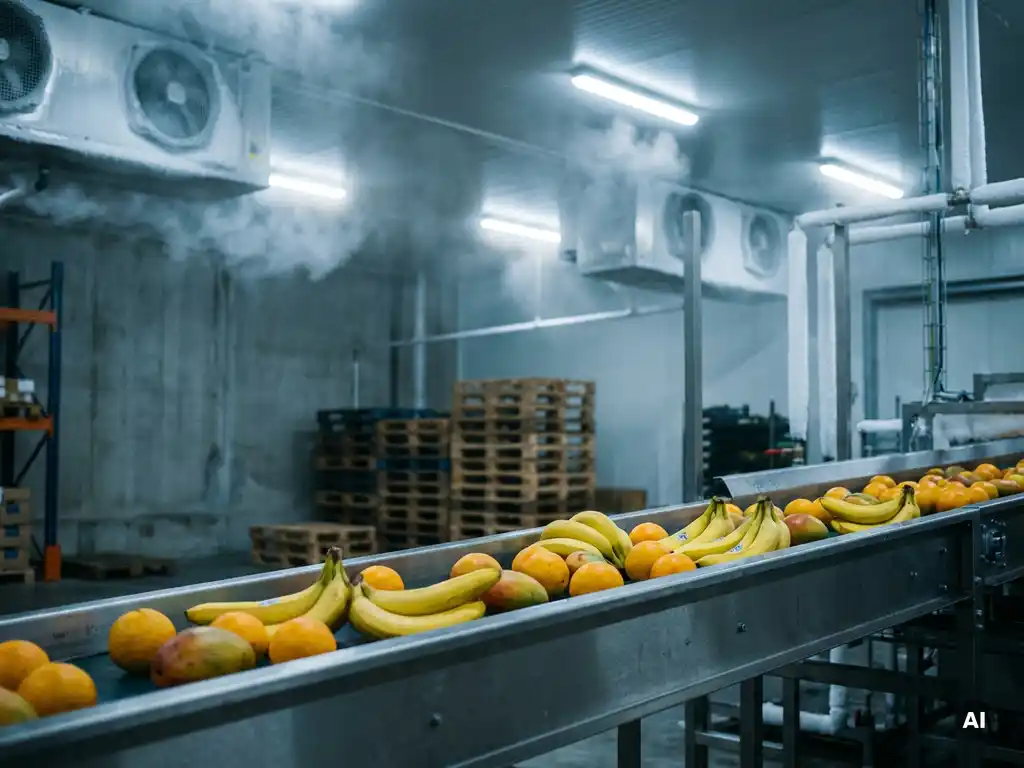
Between arrival and departure, goods in a warehouse go through a series of fixed steps: receipt and inspection, storage under the correct conditions, any processing such as labeling or quality control, and finally preparation for delivery. This process varies by product type and storage method, but the core is always the same: transporting goods from A to B safely, traceably, and in optimal condition. The questions below provide a clear answer to what happens in practice for each phase.
What steps do goods go through upon arrival in a warehouse?
Upon arrival at a warehouse, goods are first registered, inspected, and assigned to a storage location. This inbound process lays the foundation for everything that follows: without correct receipt, reliable storage and delivery are not possible. The speed and accuracy of this phase largely determine the quality of the rest of the goods flow.
In practice, arrival proceeds via a number of fixed procedures:
- Notification and planning: before a shipment arrives, the inbound time is scheduled based on the transport or sailing schedule. This prevents waiting times and ensures that the correct storage capacity is available.
- Unloading and registration: goods are unloaded and immediately registered in the warehouse management system. Each pallet receives a unique identification, linked to grower or LOT numbers for full traceability.
- Quality Control (QC): every shipment is inspected for damage, incorrect labeling, packaging deviations, and the overall condition of the product. For fresh products, additional measurements are performed, such as temperature and humidity measurements, in full accordance with the agreed product specifications.
- Sorting and placement: products that do not meet quality standards are immediately separated from the batch. The approved goods are assigned to the correct storage zone.
A detailed QC report upon arrival gives clients immediate insight into the condition of their shipment, enabling them to make the right decisions quickly.
How are goods stored and monitored during their stay in a warehouse?
During their stay in a warehouse, goods are stored under conditions tailored to the specific product, and these conditions are continuously monitored. For fresh and perishable products, this means that temperature, humidity, and air circulation are measured and adjusted 24/7. For dry products, it involves a stable environment with the correct temperature and protection against moisture or contamination.
Monitoring is not a one-off action but an ongoing process. Modern warehouse management systems record storage conditions and link them to the specific batch. This provides insight at any time into where a pallet is located, under what conditions it is stored, and how long the goods have been in the warehouse. Barcode-driven traceability makes it possible to reconstruct the entire chain per pallet, from arrival to departure.
When conditions fall outside the agreed range, immediate action is taken. This is particularly relevant for products such as exotic fruit, where small deviations in temperature or humidity can have direct consequences for quality and shelf life.
What is the difference between cold storage and dry storage in a warehouse?
Cold storage is intended for fresh and temperature-sensitive products that require active climate control, such as exotic fruits, vegetables, and citrus fruits. Dry storage, also known as ambient storage, is suitable for products that remain stable at a moderate, controlled temperature without active cooling, such as nuts, peanuts, seeds, and potato products.
The difference lies not only in the temperature, but also in the technical setup and the requirements placed on the environment:
- Cold storage: active control of temperature, humidity, and air circulation, tailored to each product type. Climate chambers can be set per product. Suitable for products that spoil quickly at excessively high or low temperatures.
- Dry storage: a stable environment at a moderate temperature, typically around 11 degrees. No active cooling, but protection against temperature fluctuations, moisture, and cross-contamination. Suitable for extended storage periods of dry food products.
For suppliers and importers, it is important to choose the right storage method based on product specifications. An incorrect choice leads to loss of quality, rejections, or food safety issues. If in doubt about the correct conditions for a specific product, consultation with the warehousing partner is the appropriate step.
Which documents and customs procedures are involved in warehousing?
When warehousing imported goods, various documents and customs procedures are required, depending on the origin of the products and the destination. For products from outside the European Union, this involves at a minimum customs clearance, a phytosanitary inspection, and in some cases an import inspection via the NVWA or the KCB.
The most common documents and procedures in the warehousing process are:
- Customs clearance: goods from outside the EU must be declared to customs before they can be placed in free circulation. This requires a customs declaration with the correct goods code, country of origin, and declaration of value.
- Phytosanitary inspection: for fresh plant products such as fruit and vegetables, a phytosanitary certificate is required, issued by the competent authority in the exporting country. Upon arrival in the EU, the NVWA or the KCB carries out an import inspection.
- Freight documents: such as a bill of lading, CMR consignment note, or air waybill, depending on the mode of transport.
- Packing lists and certificates: such as quality certificates, declarations of origin and, where applicable, organic certification (SKAL or Demeter).
A warehousing partner with customs experience and the right certifications can take this process largely off your hands, from the initial notification upon arrival to the issuance of the necessary documents for further distribution.
How are goods prepared for departure from a warehouse?
Preparation for departure, also known as the outbound process, involves gathering the correct goods based on an order, performing any necessary processing, and preparing them for transport. This is the phase where errors have the most direct consequences, as an incorrect or incomplete shipment is only discovered at the recipient's location.
A careful outbound process consists of the following steps:
- Order picking: based on a sales order or delivery order, the correct pallets or packages are selected, taking into account FIFO (first in, first out) or other product-specific rules.
- Value Added Services (VAS): operations such as applying customer-specific labels, barcodes, or expiration dates are often performed just before departure. This prevents errors and ensures a smooth flow to the next link in the chain.
- Load readiness notification and documentation: the shipment is checked for completeness and the associated freight documents, packing lists, and any certificates are prepared.
- Transport and shuttle runs: for distribution within a radius of approximately 40 kilometers, the warehousing partner arranges its own transport in some cases, directly linked to the outbound process.
EDI connections between the warehouse management system and the client's systems ensure that order processing, inventory updates, and status reporting run automatically, without manual intervention.
What risks can occur in the warehousing process and how are they mitigated?
The main risks in the warehousing process are quality loss due to incorrect storage conditions, errors in administration and traceability, and delays caused by insufficient coordination between inbound, storage, and outbound. These risks are greatest for fresh and fragile products, because the margins for deviation are small.
The most common risks and the associated control measures:
- Temperature deviations: are prevented by 24/7 monitoring of climate conditions and immediate intervention in the event of deviations. A short time between unloading and placement in cold storage is essential in this regard, particularly for products delivered via the quay.
- Cross-contamination: is limited by physically separating products based on product type, origin, and storage conditions. Separate areas for different product categories, such as nuts and seeds from fresh fruit, are standard practice in this regard.
- Administrative errors are minimized through barcode-driven registration and EDI connections. Every pallet is traceable via grower and lot numbers, allowing discrepancies to be quickly identified.
- Rejections upon delivery are prevented by quality control upon arrival and sampling during the storage period. Products that do not meet the standards are separated from the batch early.
Certifications such as BRC, SKAL, and KCB/NVWA approval provide clients with the assurance that the warehousing process complies with recognized quality and food safety standards.
How ZZColdstores supports the warehousing process
ZZColdstores offers a fully integrated warehousing process for importers, wholesalers, and suppliers of fresh and dry food products. With locations in Kruiningen and Vlissingen, its own quay in the Port of Vlissingen, and certified storage (BRC, SKAL, Demeter), the company is equipped for the entire flow of goods from arrival to delivery. Specifically, this includes:
- Climate-controlled storage with 24/7 monitoring of temperature, humidity, and air circulation, tailored per product
- Dry storage at approximately 11 degrees for nuts, peanuts, seeds, and other ambient products, with a capacity of 12,000 pallet spaces
- Quality control upon arrival, including QC reporting and sampling
- Barcode-driven traceability with linking of grower and LOT numbers
- Value Added Services such as labeling, packaging, and EDI connections for automated order processing
- Customs clearance and import inspection via KCB/NVWA
Would you like to know more about the possibilities for climate-controlled storage , or would you like to discuss which storage method best suits your product and logistics chain? Contact ZZColdstores for a no-obligation consultation.
Frequently Asked Questions
How long can fresh products such as exotic fruit be safely stored in a climate-controlled warehouse?
The maximum storage duration varies significantly by product type and depends on factors such as ripeness upon arrival, transport conditions, and the set climate parameters. For exotic fruit, this typically ranges from a few days to several weeks. A good warehousing partner establishes product-specific storage protocols together with the client and actively monitors quality through sampling, enabling timely intervention or delivery.
What do I need to arrange before my first shipment arrives at a warehouse?
Ensure a clear product specification in advance, including the desired storage conditions, the necessary documentation (such as phytosanitary certificates and freight documents), and an agreed inbound schedule with the warehousing partner. The sooner the warehouse is informed of the expected arrival and product type, the better the receipt can be prepared in terms of storage capacity, climate settings, and quality control.
Can a warehouse also handle products that require both organic and conventional certification?
Yes, but this requires strict physical separation of organic and conventional products to prevent cross-contamination or loss of certification. Warehouses with SKAL or Demeter certification have the proper procedures and spatial layout to process both flows simultaneously. When selecting a warehousing partner, always check whether the necessary organic certifications are active and which separation protocols are in place.
What happens if part of my shipment is rejected during quality control upon arrival?
Rejected goods are immediately physically separated from the approved batch to prevent further contamination or quality deterioration. The client receives a detailed QC report with the findings, enabling a quick decision to be made regarding return, destruction, or alternative disposal. A transparent reporting process is essential in this regard, as it forms the basis for any potential claims against the supplier or insurer.
How does the EDI connection between a warehouse management system and my own systems work?
An EDI (Electronic Data Interchange) connection enables the automatic exchange of order information, inventory updates, and status messages between the warehousing partner's system and your own ERP or order management system. This eliminates manual entry, reduces the risk of errors, and provides real-time insight into inventory status. When setting up the connection, both parties agree on the file formats and communication protocols; this is a one-time implementation process that subsequently runs largely automatically.
Which certifications are most relevant when choosing a warehousing partner for food products?
For food products, BRC (British Retail Consortium) and IFS (International Featured Standards) are the most recognized quality and food safety certifications, demonstrating that the warehouse meets strict requirements regarding hygiene, traceability, and risk management. For organic products, SKAL and Demeter are relevant, and for fresh fruit and vegetables, KCB and NVWA approvals are required for import inspections. Always ask for current certificates and check whether the scope of the certification corresponds to your specific product category.
Is it possible to combine warehousing with additional logistics services such as distribution or cross-docking?
Many specialized warehousing partners offer additional services alongside storage, such as their own transport for local distribution, cross-docking for rapid throughput without long-term storage, and Value Added Services such as labeling and repackaging. Combining these services under one roof reduces the number of links in the chain, lowers the risk of errors, and shortens lead times. Discuss during the intake meeting which additional services align with your logistics needs so that the overall process is optimally structured.