
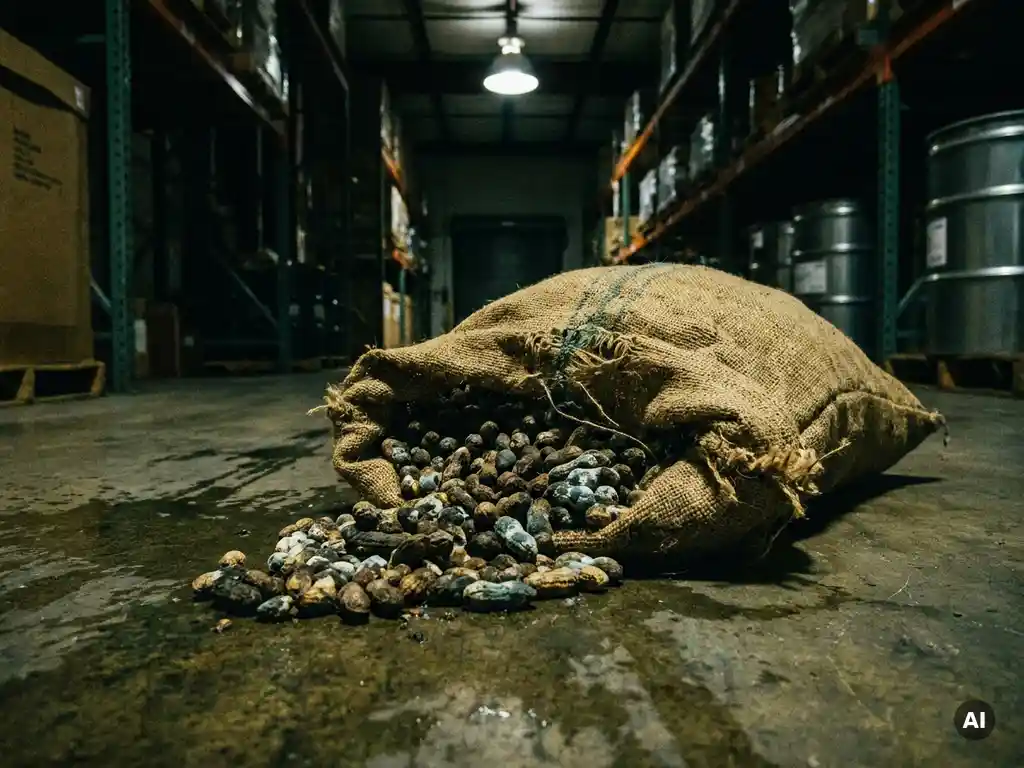
Poorly stored peanuts can cause serious aflatoxin contamination, with direct consequences for public health, the shelf life of batches, and the commercial position of importers and wholesalers. Aflatoxins are toxic mold toxins produced by fungi of the genus Aspergillus, particularly Aspergillus flavus and Aspergillus parasiticus. They form under insufficiently dry and warm storage conditions and are not visible to the naked eye. This article answers the most frequently asked questions about aflatoxin in peanuts: from the causes and health risks to legal standards, detection methods, and the role of proper storage.
How does aflatoxin contamination occur in peanuts?
Aflatoxin contamination in peanuts occurs when molds of the genus Aspergillus develop on or in the peanuts under favorable conditions. This happens particularly with a combination of excessive humidity, insufficient ventilation, and temperatures above 25 degrees Celsius. The mold then produces aflatoxins as a byproduct of its metabolism.
Contamination can begin in the field, during harvesting or drying, but worsens significantly during transport and storage if conditions are not controlled. Peanuts are particularly susceptible because they have a relatively high fat content and appear protected by their shells, yet can still absorb moisture. As soon as the water activity in the peanut rises above a critical threshold, the mold gains the opportunity to grow and produce toxins. This makes the storage phase one of the most critical moments in the entire chain.
What health risks does aflatoxin pose?
Aflatoxins are among the most toxic and carcinogenic natural substances found in food. Exposure to aflatoxin B1, the most common and harmful variant, has been linked to liver cancer, liver damage, and a weakened immune system. High acute exposure can lead to aflatoxicosis, a severe liver condition that is fatal in extreme cases.
Chronic exposure to low concentrations is also concerning. Aflatoxins accumulate in the body and are heat-resistant, meaning that roasting or heating does not completely neutralize the toxins. For B2B parties in the food chain, this is crucial: a batch of peanuts that appears visually acceptable can still pose a danger to end users and processing plants.
What are the legal standards for aflatoxin in the EU?
The European Union applies strict maximum limits for aflatoxins in peanuts, laid down in EU Regulation 2023/915. For peanuts intended for direct human consumption, a maximum limit of 10 micrograms per kilogram applies to the sum of aflatoxins B1, B2, G1, and G2, of which aflatoxin B1 individually may not exceed 8 micrograms per kilogram. Slightly more lenient limits apply to peanuts undergoing further processing.
The EU conducts regular border checks on import consignments, and peanuts from certain countries of origin are monitored particularly closely. Consignments exceeding the standards are returned, destroyed, or withdrawn from the market. For importers and wholesalers active on the European market, with Germany being one of the largest markets, compliance with these standards is not optional but a strict market access requirement.
How does the correct storage temperature prevent aflatoxin formation?
The correct storage temperature significantly inhibits the growth of Aspergillusmolds and is therefore one of the most effective preventive measures against aflatoxin formation. Peanuts are preferably stored at a stable temperature of around 10 to 12 degrees Celsius, combined with a humidity below 70 percent. Under these conditions, mold growth is strongly inhibited and the water activity of the product remains at a safe level.
Temperature fluctuations are at least as dangerous as an excessively high base temperature. Changing conditions lead to condensation, creating localized moisture that stimulates mold growth. A stable, controlled storage environment, in which ventilation and air circulation are also monitored, is therefore essential. This is precisely why ambient warehousing for dry products such as peanuts is a separate discipline that imposes different requirements than regular warehouse storage.
What are the commercial consequences of aflatoxin contamination?
Aflatoxin contamination has far-reaching commercial consequences for all parties in the chain. When a batch of peanuts exceeds EU standards, it is blocked, recalled, or destroyed, resulting in direct financial losses. But the damage extends beyond the value of the batch itself.
The main commercial risks are:
- Full write-off of the consignment, including transport and storage costs already incurred
- Fines and liability for delivery to processing plants or supermarket chains that discover the contamination only later
- Reputational damage among regular customers, which can lead to loss of contracts
- Increased inspection frequency by the NVWA or foreign authorities, resulting in additional costs and delays for future shipments
- Loss of certifications that grant access to specific sales markets or customers
For supply chain managers and buyers at agri-food companies, aflatoxin control is therefore not only a quality issue, but a direct risk factor for business continuity.
How is aflatoxin in peanuts detected and tested?
Aflatoxin in peanuts is detected via laboratory analysis, in which samples are taken from a batch and chemically analyzed for the presence and concentration of aflatoxins. The most commonly used methods are ELISA tests (for rapid screening) and HPLC analysis (for accurate quantification).
The sampling protocol is crucial in this regard. Aflatoxin does not distribute evenly throughout a batch; contamination can be highly concentrated in a limited part of the shipment. European regulations therefore prescribe how many samples must be taken per batch and how these are combined into a representative composite sample. An inadequate sampling plan leads to false-negative results, with all the associated consequences.
The steps in the detection process typically proceed as follows:
- Sampling of the batch in accordance with the prescribed EU protocol
- Homogenization of the mixed sample in the laboratory
- Extraction of aflatoxins from the sample material
- Screening via ELISA or lateral fluid test
- Confirmation analysis via HPLC in case of positive or inconclusive result
- Reporting and comparison with statutory maximum limits
Rapid screening tests are suitable for routine checks upon arrival of a shipment. In case of doubt or for consignments from high-risk areas, a full HPLC analysis is recommended.
Which storage certifications are relevant for safe peanut storage?
For the safe storage of peanuts, multiple certifications are relevant, depending on the sales market and the requirements of buyers. The most requested certifications in the European food chain are BRC Food (British Retail Consortium), IFS Logistics, and FSSC 22000. These standards set requirements for hygiene, mold control, temperature recording, traceability, and the management of critical control points.
Specifically for the Dutch market and imports via ports such as Rotterdam and Antwerp, inspections by the NVWA and import inspections via the KCB are also relevant. Organic peanuts additionally require SKAL certification. For storage locations handling organic products, it is important that the storage area is completely separated from conventional batches so that certification is not compromised.
A certified storage partner offers demonstrable guarantees regarding storage conditions, temperature and humidity monitoring, and the traceability of every batch. This is increasingly becoming a strict purchasing requirement for supermarket suppliers and processing plants.
How ZZColdstores helps with safe peanut storage
ZZColdstores offers dry storage for peanuts in a stable, controlled storage environment specifically designed for dry and shelf-stable food products. The facilities in Kruiningen and Vlissingen are designed to maintain conditions that prevent aflatoxin formation: a constant temperature of approximately 11 degrees Celsius, low humidity, and sufficient air circulation.
For importers, wholesalers, and suppliers who store and distribute peanuts to the European market, ZZColdstores offers the following:
- Ambient warehousing in a clean, dry, and stable storage environment
- Quality control upon arrival, including moisture and condition measurements
- Full traceability via barcode-driven systems with LOT number linking
- BRC and SKAL certification for demonstrable quality assurance
- Container handling and possibility of direct inspection upon unloading
Would you like to know how ZZColdstores can store your peanut batches safely and in accordance with EU standards? Contact us for a no-obligation discussion about the possibilities.
Frequently Asked Questions
How quickly can aflatoxin contamination develop during storage?
Under unfavorable storage conditions — such as humidity above 70% and temperatures above 25°C — Aspergillus mold can produce significant amounts of aflatoxins within a few days to weeks. This makes continuous monitoring of temperature and humidity essential, not only upon arrival of a batch but throughout the entire storage period. Do not wait for visible mold growth: aflatoxin production has already started long before there are visual signs.
Can I still save a contaminated batch of peanuts or use part of it?
In most cases, a batch exceeding EU maximum limits can no longer be 'saved' for human consumption. Sorting or cleaning can slightly reduce the concentration, but does not guarantee that the remaining batch meets legal standards. Moreover, EU regulations explicitly prohibit diluting a contaminated batch with a clean batch. The safest and legally correct advice is to have the batch assessed by an accredited laboratory and to act based on the results in consultation with the NVWA.
How often should I have my stored peanuts tested for aflatoxin?
The testing frequency depends on the country of origin, the storage duration, and the requirements of your customers. For consignments from high-risk countries — such as certain countries in West Africa or Asia that are subject to extra monitoring by the EU — testing upon arrival is an absolute minimum requirement. For longer storage periods (more than three months), an interim check is strongly recommended, especially if storage conditions are not continuously logged. Also discuss the testing frequency with your certified storage partner, who can advise you based on the specific characteristics of the consignment.
What is the difference between ambient warehousing and conventional warehouse storage for peanuts?
Conventional warehouse storage typically offers no active climate control and is not specifically designed for the sensitivity of dry food products such as peanuts. Ambient warehousing for peanuts, on the other hand, requires a stable, controlled environment with continuous monitoring of temperature and humidity, adequate air circulation, and strict hygiene protocols. Additionally, at certified ambient warehousing facilities, storage spaces are specifically designed to prevent cross-contamination and meet the requirements of quality standards such as BRC Food or IFS Logistics — requirements that standard warehouses often fail to meet.
What information do I need to request from my supplier to assess the aflatoxin risk?
Request at least the following from your supplier: a current Certificate of Analysis from an accredited laboratory stating the aflatoxin levels for the relevant batch, information on the drying method and water activity at the time of departure, and documentation regarding storage conditions during transport. Additionally, it is valuable to know the region from which the peanuts originate, as the aflatoxin risk varies significantly by region of origin. Suppliers who cannot provide this information transparently pose an increased risk to your supply chain.
Does peanut packaging affect the risk of aflatoxin formation during storage?
Yes, packaging plays an important role. Peanuts stored in breathable jute or PP bags are more susceptible to moisture absorption from the environment than products in vacuum or modified atmosphere packaging. With bulk storage in big bags or loose containers, the risk of localized moisture accumulation is greater, especially if air circulation is not properly regulated. Always ensure that the packaging is undamaged upon arrival and that pallets are not placed directly on the floor to prevent condensation from below.
What should I do if my buyer rejects a batch of peanuts based on aflatoxin?
Act quickly and with documentation: have the batch retested immediately by an independent, accredited laboratory to confirm or refute the result. Simultaneously inform your supplier and storage partner, and record all communication in writing. If contamination is confirmed, in most cases you are required to report this to the NVWA via the RASFF system (Rapid Alert System for Food and Feed). Consult your legal advisor regarding liability towards your customer and engage your insurer if you have a trade policy that covers product contamination.
Related articles
- What happens to goods between arrival and departure from a warehouse?
- How does the traceability of dry raw materials work in a European warehouse?
- How do you prevent mold formation when storing garlic?
- What is conditioned storage at a temperature of 11°C?
- What are the advantages of storage close to the port of Antwerp or Rotterdam?