
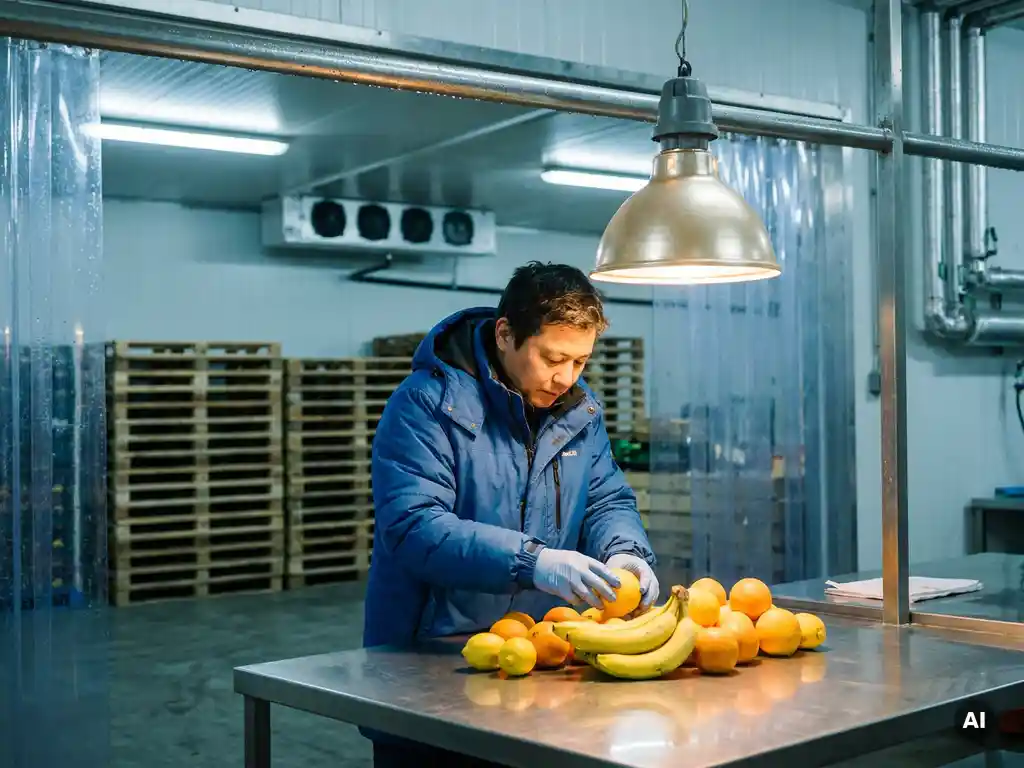
Modern warehousing services go beyond simply storing goods. In addition to storage, warehouses can perform a wide range of ancillary services, such as quality control, customs clearance, container handling, and labeling. For B2B parties in food logistics, this means that a single partner can handle the entire process from arrival to delivery. This article answers the most frequently asked questions about ancillary warehousing services and when it makes sense to entrust them to a single party.
What types of services do warehouses offer as standard in addition to storage?
In addition to storage, most professional warehouses offer standard services such as goods receipt and registration, order picking, inventory management, and delivery. In agri-food and fresh produce logistics, quality control, temperature monitoring, and administrative processing are almost always added. The exact services offered depend on the specialization and certification of the warehouse.
For importers and wholesalers of fresh products, it is important that a warehouse not only offers storage space but also manages the surrounding logistical processes. This includes registering batch numbers, monitoring expiration dates, and coordinating transport to the next link in the chain. The more integrated services a warehouse can provide, the fewer links are required and the lower the risk of errors or delays.
What are value added services (VAS) in the warehousing and logistics sector?
Value-added services (VAS) are additional services performed by a warehouse on top of basic storage that add direct value to the product or the logistics chain. Examples include relabeling, packaging, quality inspection, sorting, shipment consolidation, and documentation processing. VAS makes it possible to prepare products for the next customer without them having to be moved to a separate location.
In practice, VAS services are particularly relevant for parties that import products and deliver them directly to supermarket purchasing organizations or processing plants. Products must then meet specific requirements regarding labeling, packaging, or quality class. By outsourcing these operations to the warehouse, lead times are shortened and the product retains its quality because it is moved less frequently.
How is quality control and inspection carried out during storage?
Quality control during storage entails that goods are checked upon arrival for condition, temperature, and external characteristics, and that this is repeated periodically during the storage period. For fresh and fragile products such as exotic fruit, a visual inspection upon arrival is standard, followed by monitoring of temperature and humidity throughout the entire storage period.
A well-organized warehouse registers deviations immediately and reports them back to the client. For products under the supervision of the NVWA or KCB, the inspection forms part of a formal inspection process that is mandatory for market authorization in the EU. Traceability is essential in this regard: every pallet must be traceable to the original shipment so that prompt action can be taken in the event of a quality problem.
What role does customs clearance play in warehousing in seaports?
Customs clearance plays a central role in warehousing at seaports, as goods from third countries are only allowed to enter the European market after clearance. A warehouse offering customs services can handle clearance as soon as the goods arrive, preventing delays and ensuring products are quickly available for further distribution.
For importers of fresh products, the speed of customs clearance directly impacts product quality. The longer a consignment waits for release, the greater the risk of quality loss. Warehouses in seaports that offer both storage capacity and customs facilities can place goods under controlled conditions immediately after unloading and simultaneously process the necessary documentation. This is particularly relevant for routes from non-EU countries to the European market, including sales markets such as Germany and Eastern Europe.
Can a warehouse also handle container handling and transshipment?
Yes, many specialized warehouses, particularly those located in or near seaports, offer container handling and transshipment as part of their services. This includes unloading containers, checking and registering the contents, placing them in storage, and preparing them for further shipment by truck, rail, or inland waterway.
The added value of container handling at the warehouse itself is that the time between unloading and controlled storage is minimal. For temperature-sensitive products, this difference is crucial: every hour a product spends outside the correct conditions affects its shelf life and quality. Warehouses with their own quay or direct port access have a logistical advantage in this regard, as the transfer from the ship to the storage cell takes place almost immediately.
Which certifications are relevant for additional warehousing services?
For additional warehousing services in the agri-food sector, the most relevant certifications are BRC (British Retail Consortium), SKAL (for organic products), and KCB/NVWA accreditation for import inspections of fresh products. These certifications provide clients with assurance regarding the quality standards, hygiene, and traceability maintained by the warehouse.
- BRC: International standard for food safety, required by many supermarket chains and processing plants.
- SKAL: Required for warehouses that store and process organically certified products.
- KCB/NVWA accreditation: Mandatory for the import inspection of fresh products such as fruit and vegetables entering the EU from third countries.
- Demeter: Relevant for biodynamically certified products, an additional certification on top of SKAL.
For supply chain managers and buyers, checking the certification status of a warehouse is a standard part of the selection process. Certifications are not only a quality indicator but also a contractual requirement from customers such as supermarket purchasing organizations.
When does it make sense to outsource additional services to the warehouse?
It makes sense to outsource additional services to the warehouse when coordination between storage, inspection, customs, and transport would otherwise have to go through multiple parties. The more links in the chain, the greater the risk of delays, miscommunication, and loss of quality, particularly with fresh and temperature-sensitive products.
Concrete situations where bundling at a single warehouse offers advantages:
- Products arrive via the seaport and must be cleared immediately and stored under refrigeration.
- Batches must be inspected and certified before being resold to supermarket customers.
- Containers are unloaded and the contents must be consolidated or sorted for multiple destinations.
- Documentation for export to Germany, Ukraine, or other markets must be provided alongside physical storage.
Consolidating services with a single partner reduces the administrative burden, shortens lead times, and makes the chain more transparent. For logistics managers and buyers responsible for the quality of the end product, this is a practical consideration that directly impacts the reliability of the supply chain.
How ZZColdstores integrates additional warehousing services
From its locations in Kruiningen and Vlissingen, ZZColdstores offers an integrated package of warehousing services for B2B parties in the agri-food sector. The private quay in Vlissingen enables direct unloading and immediate storage, minimizing time spent outside controlled conditions. The additional services provided by ZZColdstores include:
- Climate-controlled storage with 24/7 monitoring of temperature, humidity, and air circulation, tailored to the requirements of the specific product.
- Container handling and transshipment, directly adjacent to our own quay.
- Import inspection via KCB (part of the NVWA) for fresh products.
- Customs clearance as part of the overall logistics process.
- Dry storage for nuts, peanuts, seeds, and other food products, with a capacity of 12,000 pallet spaces.
- Full traceability of every pallet via a barcode system, from arrival to departure.
ZZColdstores is certified according to BRC, SKAL, and Demeter, making its services suitable for suppliers to supermarket chains and processing plants that place high demands on food safety and traceability. More information about the climate-controlled storage facilities is available on the website. To discuss the possibilities for your specific product stream, please contact ZZColdstores.
Frequently Asked Questions
How do I know if a warehouse has the right certifications for my specific product?
Always request an up-to-date certification overview with corresponding validity dates from a warehouse. For fresh fruit and vegetables, KCB/NVWA accreditation is a strict requirement, while BRC certification is generally mandatory for supermarket customers. Also, check whether the certifications specifically apply to the services you purchase, such as storage, handling, or processing, as not every certification covers the full range of services.
What are the risks if I outsource storage, customs clearance, and quality control to different parties?
The greatest risks are delays, miscommunication, and loss of quality due to unnecessary movement of the product. For temperature-sensitive products such as fresh fruit, every extra link in the chain can mean that the product temporarily remains outside ideal climatic conditions, which directly affects shelf life. Furthermore, working with multiple parties increases the likelihood of administrative errors in documentation and traceability, which can lead to delays or rejections during import inspections.
How do I start switching to a warehouse that offers additional services?
Start with a thorough analysis of your current logistics chain: which operations are currently performed by which parties, and where do most delays or errors occur? Next, map out which services an integrated warehouse can take over and ask a warehouse for a concrete quote based on your product flow and volumes. A trial period or pilot project with a single product category is a practical way to test the collaboration before transferring the entire chain.
Can additional warehousing services also be used for small or fluctuating volumes?
Yes, many warehouses work with flexible contract models where you pay based on actual usage, such as pallet spaces per day and operations performed per batch. This also makes additional services accessible to importers with seasonal or fluctuating volumes. When selecting a warehouse, explicitly discuss the minimum requirements and rate structures so that the collaboration remains profitable even at lower volumes.
How is traceability ensured when a warehouse performs multiple services on the same batch?
A professional warehouse links every action, from receipt and inspection to relabeling and delivery, to a unique pallet or batch identification via a barcode or WMS (Warehouse Management System). This ensures that every step in the process is recorded and remains traceable to the original shipment. Always ask a potential partner about the operation of their traceability system and whether you, as the client, can gain real-time insight into the status of your batches.
What questions should I ask when selecting a warehouse for ancillary services in the agri-food sector?
In any case, ask questions about available certifications and their validity, experience with your specific product category, capacity for peak periods, response time for quality deviations, and how traceability is maintained. Also inquire about the location relative to the port and whether customs clearance is handled in-house or through an external party. A warehouse that provides transparent and detailed answers to these questions already gives an indication of the organization's professionalism.
What is the difference between a regular cold storage warehouse and a specialized agri-food warehouse?
A standard cold storage warehouse offers climate-controlled space but typically lacks the specific knowledge, certifications, or facilities required for the agri-food sector. A specialized agri-food warehouse has experience with the specific requirements of fresh products, holds KCB/NVWA accreditation for import inspections, and can provide additional services such as sorting, relabeling, and customs clearance. The difference becomes particularly apparent with complex products or strict customer requirements, where knowledge of laws and regulations and demonstrable quality assurance are decisive.
Related articles
- What activities can a warehouse perform for an importer?
- What is the difference between ambient storage and room temperature storage?
- What is the risk of condensation when unloading refrigerated containers?
- What are the risks of improper storage of peanuts and cashews?
- How does the transit of dry goods to Germany or Ukraine work?