
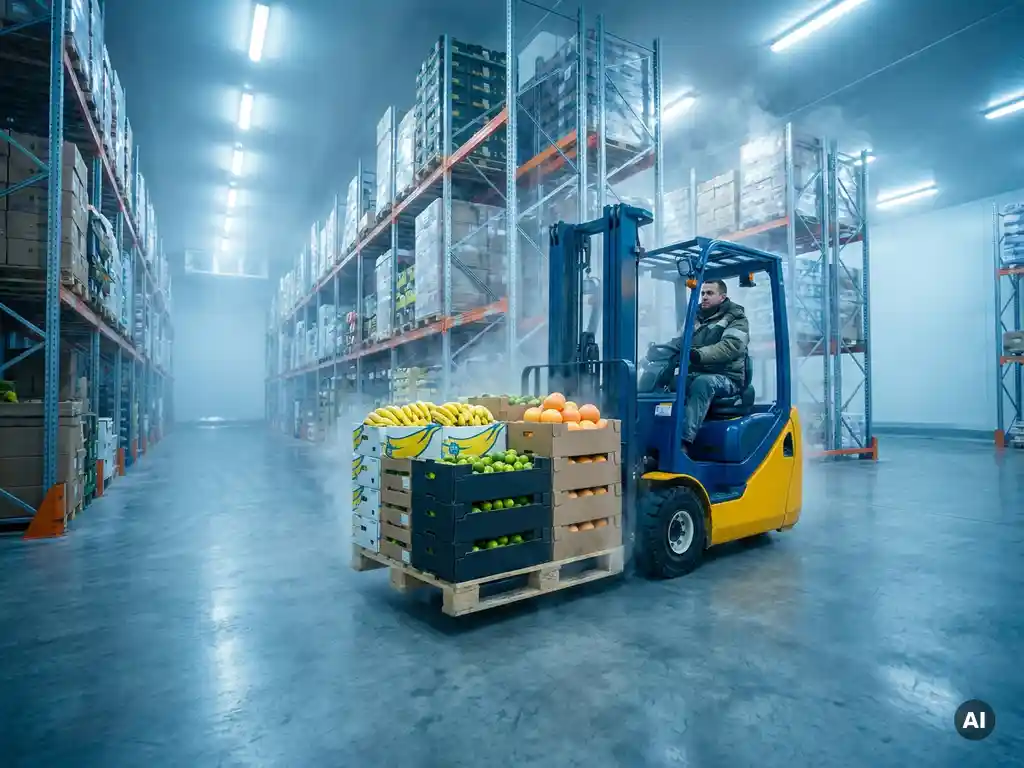
A warehouse can perform a wide range of logistical tasks for an importer: from unloading and storage to quality control, customs clearance, and preparation for further distribution. This makes a warehouse not just a storage location, but a fully-fledged operational link in the supply chain. The questions below delve deeper into what a warehouse can concretely mean for importers.
Which logistical tasks does a warehouse take over from an importer?
A warehouse completely takes over the physical flow of goods from an importer: unloading containers, storing under the correct conditions, performing quality checks, handling customs formalities, and preparing shipments for further distribution. Importers who work with a specialized warehouse do not need to manage storage infrastructure, personnel, or systems themselves.
In practice, this encompasses a wide range of activities. Upon arrival of the goods, containers are opened, inspected, and unloaded. The products are then stored in the appropriate environment, either refrigerated or dry, depending on the product type. Simultaneously, administrative processes such as customs clearance and import inspections are initiated. Once the goods have been released, they can be assembled, labeled, and prepared for transport to the final destination.
For importers of dry food products such as nuts, peanuts, or seeds, this means that a warehouse assumes full operational responsibility, from arrival to delivery. This allows importers to focus on purchasing, sales, and customer relationships, without the daily logistical hassles.
How does transshipment and container handling work in a warehouse?
Transshipment and container handling in a warehouse begins with the collection or receipt of containers, followed by unloading, inspection, registration, and storage in the correct storage zone. The speed of this process is crucial for the quality of fragile products, as every minute outside the controlled environment counts.
At warehouses with their own quay, such as in the Port of Vlissingen, transshipment is particularly efficient. Containers are unloaded directly next to the cold storage facility, minimizing the time between unloading and storage. This is especially relevant for fresh products such as exotic fruit, where temperature fluctuations during transshipment can cause immediate quality damage.
Each product is assigned a barcode or other tracking system upon arrival. This ensures that every pallet is fully traceable from arrival to departure. This is not only convenient for the importer but is also required by certification standards such as BRC. Container handling seamlessly aligns with the customs and inspection processes that are initiated in parallel.
What are the benefits of controlled storage for dry food products?
Controlled storage for dry food products offers importers assurance regarding product quality, extended shelf life, and compliance with food safety standards. Products such as nuts, peanuts, and seeds are sensitive to moisture, temperature fluctuations, and cross-contamination, meaning that proper storage conditions directly impact sales value.
Dry storage at approximately 11 degrees Celsius provides a stable environment that prevents mold formation, moisture absorption, and loss of quality. This is essential for importers supplying supermarket chains or processing plants, where strict quality requirements apply and returns are costly.
In addition, a certified warehouse offers extra assurance. Certifications such as BRC, SKAL, and Demeter give trading partners and customers confidence in the way products are stored and handled. For importers supplying the European market, particularly Germany, these certifications are often a requirement in the purchasing specifications of major customers.
Can a warehouse also handle customs clearance for importers?
Yes, a specialized warehouse can handle the entire customs clearance for importers, including import inspection and clearance. This means that goods are declared to the competent authorities immediately upon arrival, without the importer having to take any action themselves.
ZZColdstores handles, among other things, import inspections via the KCB, part of the NVWA, for products such as exotic fruit and other fresh food products. This is a legal requirement for many products imported from non-EU countries. By combining this on-site inspection with the storage facilities, delays in the logistics chain are prevented.
For importers who regularly ship large volumes, outsourcing customs formalities to a warehouse represents a significant time saving. The warehouse knows the procedures, has the right contacts at customs, and can act quickly when there are questions or discrepancies regarding a shipment.
What quality checks does a warehouse perform upon the arrival of goods?
Upon arrival, a warehouse performs quality checks for damage, packaging deviations, labeling, and product condition. Depending on the product, measurable parameters such as temperature, moisture content, and degree of ripeness are also checked. Products that do not meet the agreed specifications are immediately separated from the batch.
For fresh products such as exotic fruit, temperature measurements are taken upon arrival to verify whether the cold chain remained intact during transport. Brix measurements provide insight into the ripeness of the fruit, which determines the remaining shelf life and suitability for further distribution.
In addition to a full inspection, random sampling is also possible. This is an efficient method for shipments where a full inspection is not necessary or practical, but where the importer still wants quick insight into the quality of the cargo. The findings are recorded in a QC report, ensuring the importer has full transparency regarding each shipment and can quickly make decisions about further distribution or potential complaints to suppliers.
How flexibly can a warehouse respond to an importer's sailing schedule?
A good warehouse adapts its operations to the importer's sailing schedule, not the other way around. This means that unloading, inspections, and storage capacity are aligned with ship arrival times, even if these are confirmed outside office hours or at short notice.
In port logistics, flexibility is not a luxury, but a necessity. Sailing schedules are subject to weather conditions, delays at the port of origin, and fluctuating loading times. A warehouse that cannot anticipate these factors causes bottlenecks in the supply chain that directly impact delivery times to customers.
For importers operating from Rotterdam or Antwerp, or utilizing a direct quay connection such as in Vlissingen, the proximity of the warehouse to the berth is crucial for operational efficiency. The shorter the distance between ship and storage, the lower the risk of quality loss and the faster the goods are available for further processing or distribution.
How ZZColdstores supports importers with warehousing
ZZColdstores offers importers of fresh and dry food products a fully hassle-free warehousing package from its locations in Kruiningen and Vlissingen. Specifically, this entails:
- Climate-controlled storage for exotic fruit and other fragile products, with 24/7 monitoring of temperature, humidity, and air circulation
- Dry storage with a capacity of 12,000 pallet spaces, suitable for nuts, peanuts, seeds, and similar dry food products
- Container handling directly at our own quay in Vlissingen, for minimal transshipment time
- Quality control and sampling upon entry, with optional QC reporting
- Import inspection via KCB/NVWA and on-site customs clearance
- Certifications: BRC, SKAL and Demeter
- Full traceability per pallet via barcode system
ZZColdstores operates exclusively B2B and focuses on importers, wholesalers, and logistics partners who prioritize reliability, speed, and quality assurance. Want to know more about climate-controlled storage options? Or discuss directly what ZZColdstores can do for your specific situation? Contact us for a no-obligation consultation.
Frequently Asked Questions
What is the difference between a warehouse with and without its own quay connection?
A warehouse with its own quay connection, such as in Vlissingen, can unload containers directly next to the storage facility without an intermediate transport step. This significantly shortens transshipment time and reduces the risk of quality loss, particularly for temperature-sensitive products. A warehouse without a quay connection requires additional transport from the port to the location, which entails both time and costs and can interrupt the cold chain.
How do I start outsourcing my warehousing as an importer?
The first step is to map out your product types, volumes, supply frequency, and specific storage requirements, such as refrigerated or dry. Based on this, you can engage in a discussion with a specialized warehouse to assess whether the facilities, certifications, and operational capacity align with your needs. A good warehousing partner will always start with an intake meeting to fully understand your supply chain before making any agreements.
What happens if a shipment does not meet the quality requirements upon arrival?
If a shipment does not meet the agreed specifications upon arrival, the deviating batch is immediately separated from the approved goods to prevent cross-contamination or further deterioration of quality. The importer is immediately notified of the findings via a QC report, enabling a quick decision regarding acceptance, return, or a claim against the supplier. In this case, a specialized warehouse acts as an independent link providing the importer with documented evidence for any potential complaints.
Which certifications are most relevant for importers supplying the European market?
For importers supplying European supermarket chains or processing industries, BRC (British Retail Consortium) and FSSC 22000 are the most requested certifications, as large retailers often require them in their purchasing specifications. For importers of organic products, SKAL and Demeter are essential to guarantee the organic status of the products throughout the entire supply chain. It is advisable to always verify which certifications are current and valid when selecting a warehousing partner.
Can a warehouse also handle distribution to my customers, or does the service stop at storage?
In addition to storage, most specialized warehouses offer value-added services such as order picking, labeling, pallet assembly, and preparing shipments for transport to end customers. The actual distribution is typically carried out by a transport partner, but the warehouse coordinates the connection between storage and transport. It is important to clarify at the start of the collaboration which steps in the chain you wish to outsource so that the warehouse can align its operations accordingly.
How is traceability guaranteed when storing large volumes with multiple parties simultaneously?
Professional warehouses use a Warehouse Management System (WMS) that links every pallet to a unique barcode containing information about origin, arrival date, batch number, and storage location. Even with large volumes involving multiple suppliers or batches simultaneously, every unit remains fully traceable from inbound to outbound. This system also enables quick action in the event of a product recall, as the exact location and volume of a specific batch are immediately visible.
What are the most common mistakes made when choosing a warehousing partner as an importer?
A common mistake is selecting a warehouse based purely on price per pallet space, without taking into account the specific storage conditions, certifications, and operational flexibility required by your products. Additionally, importers often underestimate the importance of the warehouse's geographical location relative to the port of arrival and customers, which significantly impacts transport costs and delivery times. Finally, it is advisable to establish clear SLA agreements in advance regarding quality controls, reporting, and response times for deviations, to avoid misunderstandings when it really matters.
Related articles
- How much does it cost to rent a storage unit?
- What role does warehousing play between the port and the customer?
- When does a wholesaler need extra refrigerated storage space?
- What is cross-docking and when is it an alternative to buffer storage?
- What are the risks of larvae and insects when storing dried fruit?