
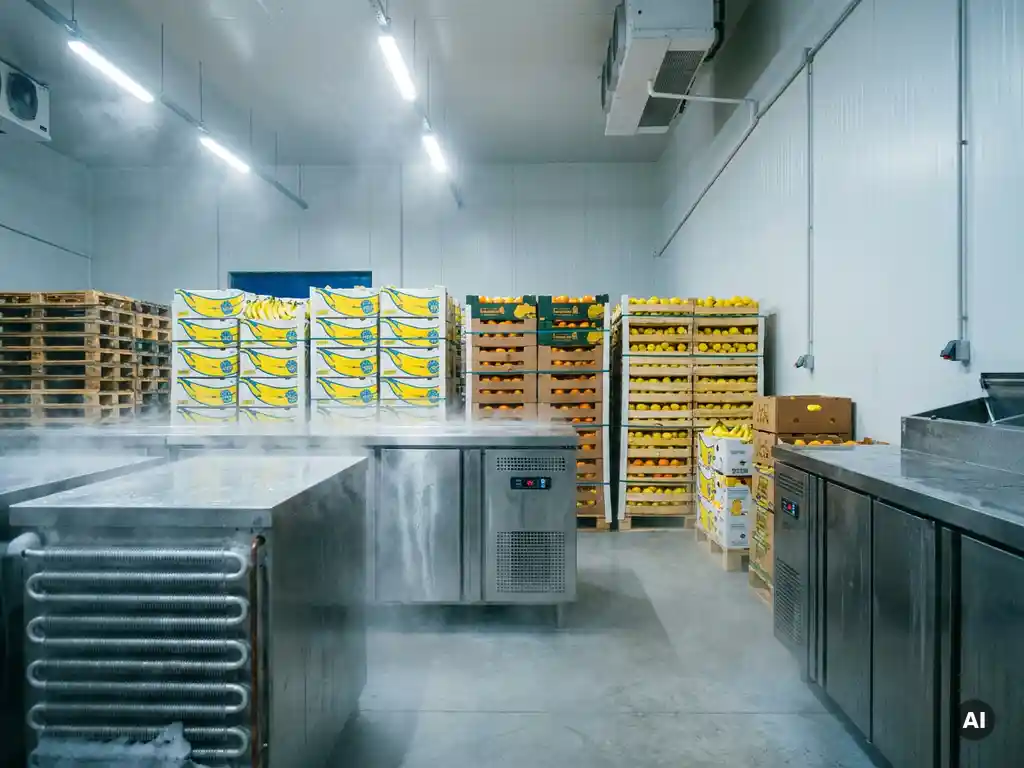
Professional food storage must comply with European hygiene legislation, specific temperature and humidity regulations, certification requirements, and mandatory traceability systems. For B2B parties in the food chain, such as importers, wholesalers, and suppliers to supermarkets, additional requirements also apply from customers and chain partners. The questions below provide a clear answer per topic regarding what professional food storage entails and what requirements a facility must meet.
What legal requirements apply to the storage of foodstuffs?
The storage of foodstuffs in Europe is primarily regulated by the European General Food Regulation (EC) No 178/2002 and the Hygiene Regulation (EC) No 852/2004. These regulations require storage companies to implement a HACCP system, prevent cross-contamination, ensure traceability, and demonstrate that storage conditions do not compromise food safety.
In practice, this means that a storage facility must have demonstrable procedures in place for temperature control, cleaning and disinfection, pest control, and the separation of products that could contaminate each other. Additionally, the NVWA acts as the supervisory authority in the Netherlands. For imported products from outside the EU, such as exotic fruit, the KCB (part of the NVWA) also plays a role in import inspections. During these inspections, an approved storage location must be able to demonstrate that the conditions met the set standards throughout the entire storage period.
What temperature is required for the storage of various food products?
The required storage temperature varies significantly by product group. Fresh vegetables and fruit generally require refrigeration between 2 and 13 degrees Celsius, depending on the specific product. Dry food products such as nuts, peanuts, and seeds are preferably stored at approximately 11 degrees Celsius to prevent loss of quality due to heat and moisture.
Exotic fruit is a special category in this context. Bananas are sensitive to cold and must not be stored below 12 to 14 degrees Celsius, as they otherwise suffer cold damage. Citrus fruits tolerate slightly lower temperatures but still require precise climate control. For dry products such as nuts, excessively high temperatures cause accelerated oxidation and spoilage of flavor. It is therefore essential that a storage facility can set and monitor the temperature separately for each product type, rather than using a single fixed setting for the entire warehouse.
What are the requirements for humidity and ventilation in a storage room?
In addition to temperature, humidity and air circulation are determining factors for the quality of stored food products. Humidity that is too high promotes mold growth and bacterial development. Humidity that is too low causes dehydration and weight loss in fresh products. The optimal humidity varies by product group and lies between 85 and 95 percent relative humidity for most fresh products.
Ventilation ensures an even temperature distribution in the storage area and prevents the accumulation of ethylene, a ripening gas emitted by many types of fruit. Ethylene accelerates the ripening process and, in the event of improper ventilation, can lead to premature spoilage of the entire batch. A professional storage facility continuously monitors humidity and air circulation, preferably via automated systems that operate 24 hours a day and intervene immediately in the event of deviations.
Which certifications must a professional food storage facility have?
A professional food storage facility must have at least a HACCP-certified food safety system. In addition, supplementary certifications are required or highly desirable in practice, depending on the product group and the customers in the chain.
The most relevant certifications for B2B food storage are:
- BRC (British Retail Consortium): an international standard for food safety that is set by many supermarket chains and processing plants as a minimum requirement for their suppliers and logistics partners.
- SKAL: required for the storage of organic products. Without SKAL certification, a facility may not store or trade organic goods as such.
- Demeter: relevant for the storage of biodynamic products, a stricter variant of organic certification.
- KCB/NVWA accreditation: necessary for the import inspection of fruit and vegetables from outside the EU.
Which certifications are required in a specific situation depends on the product, its origin, and the customers. Importers and suppliers to supermarkets would do well to check this with their storage partner in advance.
How does dry storage differ from refrigerated storage for food?
Dry storage, also known as ambient storage, is intended for products that do not require active cooling but do require a stable, controlled environment. Refrigerated storage is aimed at fresh and perishable products that must be actively kept at a low temperature to prevent spoilage. The main difference lies in the temperature range and the technical requirements of the storage infrastructure.
In dry storage, the temperature is typically around 11 degrees Celsius. This is suitable for products such as nuts, peanuts, seeds, and other dry food raw materials. Refrigerated storage operates at lower temperatures, depending on the product, and requires heavier cooling systems, stronger insulation, and more intensive climate control. However, both forms of storage can be climate-controlled: even in dry storage, temperature and humidity are actively monitored to prevent loss of quality. The distinction is therefore not only technical but also functional: it concerns which product stream requires which type of storage.
Why is the location of a storage facility important for the quality of food products?
The location of a storage facility has a direct impact on the quality of food products, particularly because the time between unloading and storage must be as short as possible. The longer a temperature-sensitive product remains outside controlled conditions, the greater the risk of quality loss. A facility situated directly at a quay or terminal significantly minimizes this exposure time.
In addition, geographical location plays a role in logistical efficiency. A location in the Rotterdam-Antwerp corridor offers direct access to the largest European import ports and enables rapid transit to destinations in Germany, Eastern Europe, and other European markets. For importers of exotic fruit or other fresh products, the combination of port location and refrigerated storage within walking distance of the quay is a decisive factor when choosing a storage partner.
What documentation and traceability are required for professional food storage?
European legislation requires all links in the food chain to maintain traceability information. This means that a storage company must be able to demonstrate for each product where it comes from, how it was stored, and to whom it was delivered. This principle is known as the “one step back, one step forward” requirement of the General Food Regulation.
In practice, this means that a professional storage facility is equipped with systems that register the origin, LOT number, storage conditions, and delivery date per pallet or lot. Barcode- or scan-driven inventory management is the standard in this regard. Additionally, for imported products, import documents, phytosanitary certificates, and inspection reports from the NVWA or the KCB are part of the mandatory file. In the event of deviations in quality or food safety, a storage partner must be able to act quickly and demonstrably, including separating rejected batches and notifying the competent authorities.
How ZZColdstores helps with professional food storage
ZZColdstores offers B2B logistics partners a complete storage solution that meets all the above requirements. With locations in Kruiningen and Vlissingen, its own quay in Vlissingen, and certifications including BRC, SKAL, and Demeter, ZZColdstores is equipped for the storage of both fresh and dry food products. Some concrete features:
- Climate-controlled cold storage with 24/7 monitoring of temperature, humidity, and air circulation, adjustable per climate chamber to the requirements of the product
- Dry storage warehouse with a capacity of 12,000 pallet spaces, suitable for nuts, peanuts, seeds, and other dry food raw materials at approximately 11 degrees Celsius
- Barcode-driven traceability where LOT numbers and grower numbers are linked to every pallet, from arrival to delivery
- Quality control upon arrival, including temperature, humidity, and Brix measurements and reporting per shipment
- KCB accreditation for import inspection and full customs clearance
- Own quay in Vlissingen for minimal exposure time when unloading ships
Would you like to know if ZZColdstores' climate-controlled storage aligns with your product flow and quality requirements? Contact us for a no-obligation consultation. ZZColdstores is happy to help find the best storage solution for your goods.
Frequently Asked Questions
How quickly can a new storage partner be engaged if my current facility does not meet the requirements?
Switching to a new storage partner typically requires a short start-up period for aligning traceability systems, transferring documentation, and setting up the appropriate climate chambers for each product type. In most cases, this can be arranged within a few working days, provided the new partner possesses the necessary certifications and storage capacity. It is advisable to conduct a trial storage or pilot batch beforehand to verify that the working method aligns with your quality requirements and internal processes.
What happens if the temperature or humidity during storage falls outside the standards?
A professional storage facility is equipped with automated alarm systems that intervene immediately in the event of deviations in temperature or humidity, even outside office hours. Upon detection of a deviation, the affected party is immediately isolated and assessed for quality impact, after which the client is informed and a report is drawn up. As the client, ensure that the SLAs regarding response times and the procedure for quality damage, including liability, are contractually stipulated.
Can a single storage facility store both organic and conventional products?
Yes, but only if the facility holds SKAL certification and has demonstrable procedures for the physical separation of organic and conventional products. Cross-contamination or insufficient separation can lead to the loss of a batch's organic status, with direct financial and commercial consequences. Always explicitly ask a storage partner about the setup of the separation and how this is documented and monitored.
What questions should I ask when selecting a storage partner for my food products?
At a minimum, inquire about the certifications held (HACCP, BRC, SKAL, KCB accreditation), the technical specifications of the climate chambers, the method of traceability registration, and the available capacity per product type. Also ask about the procedures for quality deviations, the options for quality control upon arrival, and the location relative to the port or terminal where your goods arrive. A transparent partner proactively shares this information and invites you for a tour.
Is ethylene control standard in every refrigerated storage facility?
No, not every refrigerated storage facility is equipped with active ethylene control. This is a specific technical feature relevant for the storage of ethylene-sensitive fruit such as bananas, avocados, and kiwis, but also for products that emit ethylene themselves and can thereby affect other products in the same room. If you store ethylene-sensitive products, it is essential to verify in advance whether the facility has adequate ventilation and, where applicable, ethylene filters or separate climate chambers.
What is the difference between a KCB inspection and an NVWA inspection, and who is responsible for what?
The KCB (Quality Control Bureau) is part of the NVWA and specifically carries out quality inspections of fruit and vegetables entering the EU from third countries, based on European trade standards. The NVWA has a broader supervisory role regarding food safety in general, including hygiene inspections of storage locations. For importers of fruit and vegetables from outside the EU, a KCB-approved storage location is necessary to allow on-site import inspections to be carried out, which prevents delays in the logistics chain.
How do I know if my dry food products, such as nuts or seeds, benefit from climate-controlled storage instead of standard warehouse storage?
Dry products such as nuts, peanuts, and seeds are sensitive to heat, moisture, and oxidation, leading to flavor spoilage, mold formation, and—in the case of nuts—elevated aflatoxin levels—a food safety risk with direct consequences for marketability and export. Standard warehouse storage offers insufficient protection if temperature and humidity are not actively monitored and regulated. Climate-controlled dry storage at around 11 degrees Celsius is therefore not a luxury for this product group, but a quality and compliance requirement, especially when supplying supermarket chains or processing plants with BRC requirements.
Related articles
- What happens in the event of a temperature deviation during cold storage?
- How does seasonal supply affect storage planning for importers?
- What are the consequences of aflatoxin in poorly stored peanuts?
- How does ambient storage for nuts and dried fruit work?
- What is a European hub and why do importers choose one?