
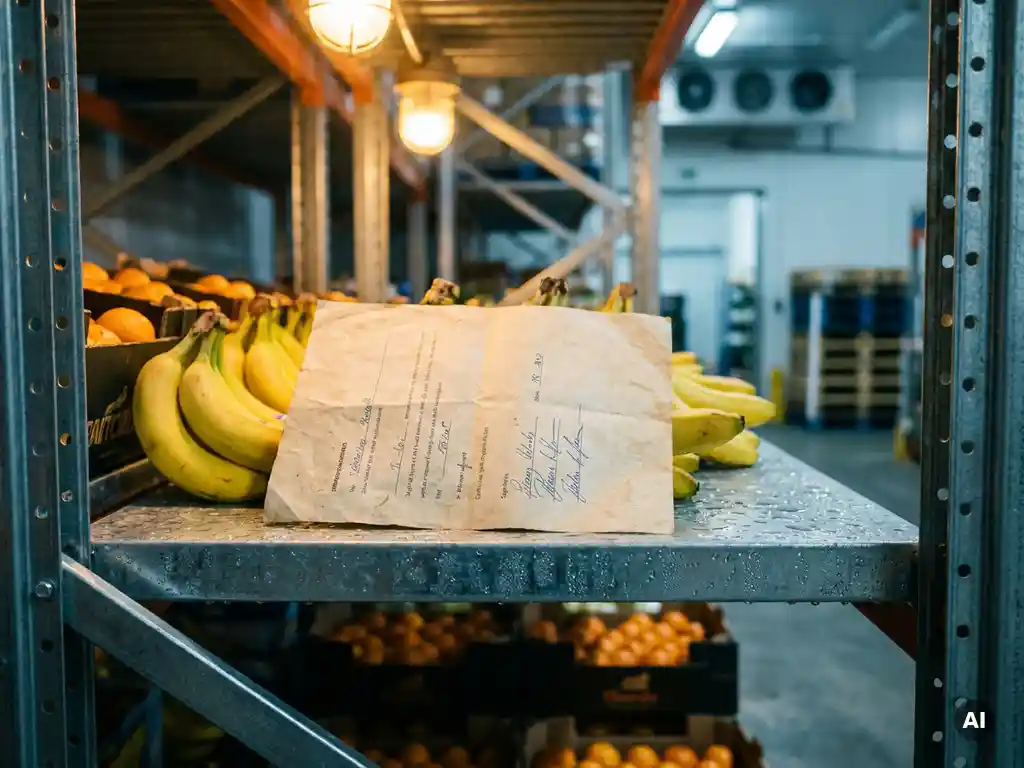
When stored in a third-party warehouse, ownership of the goods generally remains with the owner who received them. The warehouse operator does not acquire ownership rights but assumes physical safekeeping and thereby bears a duty of care. Exactly who is responsible for damage, loss, or deterioration of quality depends on the agreement concluded and the moment at which risk formally transfers. The questions below elaborate step-by-step on every aspect of ownership transfer in third-party storage.
Who is legally responsible for goods in a 3PL warehouse?
In a 3PL warehouse, the legal owner of the goods remains the party that received them. The logistics service provider is not the owner, but a custodian with a duty of care. This means that the 3PL can be liable for damage caused by negligence, but not for circumstances beyond its control.
Dutch law distinguishes between ownership and custody in this regard. Ownership is an absolute right that does not automatically transfer upon the transfer of physical control. The custodian, in this case the 3PL operator, has a duty to treat the goods as a good custodian. If he fails to do so, he is liable for the damage suffered, unless he can demonstrate that the damage would have occurred even without his failure.
For importers, wholesalers, and supply chain managers, it is important to know that the liability of the 3PL is typically limited through the applicable general terms and conditions, such as the Fenex conditions or CMR rules for international transport. A good warehouse agreement establishes which liability limits apply and under what circumstances the 3PL is absolved of liability.
When exactly does the transfer of ownership take place in third-party storage?
Transfer of ownership in third-party storage does not take place automatically the moment goods enter the warehouse. Ownership only passes to another party when there is a legal basis for doing so, such as a purchase agreement with delivery, a retention of title that expires, or a specific contractual agreement.
In practice, there are three moments at which ownership can transfer when using a 3PL:
- Upon delivery at the warehouse: If the sales agreement stipulates that delivery takes place at the time of receipt, ownership transfers as soon as the goods are entered into the 3PL's warehouse system.
- Upon release by the seller: When a seller has stipulated a retention of title clause, he remains the owner until the buyer has paid in full. Only after payment does the seller release ownership, even if the goods are already in the possession of the 3PL.
- Upon issuance to the buyer: In some trading structures, ownership only transfers at the moment the 3PL physically issues the goods to the buyer or their carrier.
The time of transfer of ownership has direct consequences for the question of who is required to be insured and who bears the risk in the event of loss or damage.
What is the difference between transfer of risk and transfer of ownership?
Transfer of risk and transfer of ownership are two separate legal concepts that do not always occur simultaneously. Transfer of ownership determines who is the rightful owner of the goods. Transfer of risk determines who bears the financial consequences in the event of loss, damage, or destruction of the goods, regardless of who the owner is.
In international trade transactions, risk and ownership are often deliberately decoupled. The Incoterms, the international trade conditions published by the International Chamber of Commerce, govern exclusively the transfer of risk and not the transfer of ownership. Thus, a buyer may bear all the risk from the moment the goods are loaded on board the ship, while ownership only passes after full payment.
For storage in a 3PL warehouse, this concretely means:
- The goods may be the legal property of Party A, while Party B bears the risk.
- The 3PL itself bears no ownership risk, but does bear an operational liability risk as a custodian.
- Insurance policies must be tailored to the risk-bearing party, not automatically to the owner.
- In the event of damage in the warehouse, the question of who bears the risk determines who can file a claim.
A clear contractual demarcation between risk and ownership prevents disputes in the event of damage and expedites the handling of claims.
How does a warehouse agreement protect the owner of the goods?
A warehouse agreement protects the owner of goods by documenting the 3PL's obligations in writing, including the duty of care, liability limits, insurance obligations, and procedures in the event of damage or loss. Without a proper agreement, the owner is dependent on general statutory provisions, which may turn out less favorably.
A good warehouse agreement contains at least agreements on the following points:
- Duty of care and storage standard: What measures does the 3PL take to keep the goods in good condition, such as temperature control, humidity control, and access restrictions.
- Liability limits: Up to what amount is the 3PL liable for damages, and which exclusions apply.
- Insurance: Is the 3PL required to take out goods insurance, or does that responsibility lie with the owner?
- Reporting and traceability: How is inventory tracked and what information does the owner receive regarding the status of his goods?
- Procedures regarding damage: How and within what timeframe damage must be reported and handled.
Certifications such as BRC provide additional assurance regarding the quality standards maintained by a warehouse. However, they do not replace a legally binding agreement.
What happens to property at a customs bonded warehouse or excise storage?
Ownership of the goods does not change upon storage in a customs warehouse or excise storage facility. The owner remains the owner, but the goods are in a special customs status where import duties and VAT have not yet been paid. The customs authorities supervise the goods but do not acquire any ownership rights in doing so.
What does change is the degree of control the owner can exercise over their goods. Goods in a customs warehouse may not simply be released or moved without permission from customs. The 3PL managing the warehouse is the license holder and bears responsibility to customs for the integrity of the stored goods.
Upon release from the customs warehouse, the goods are placed in free circulation, the duties due are paid, and the owner has full disposal of the goods. Only at that moment are all restrictions lifted and ownership can be transferred unconditionally to the next party in the chain.
How does the transfer of ownership work for refrigerated or temperature-controlled storage?
In refrigerated or temperature-controlled storage, the same legal principles regarding the transfer of ownership apply as in dry storage. Temperature control has no direct influence on ownership rights. What does differ, however, is the question of liability regarding quality deterioration resulting from temperature deviations, which can have significant financial consequences for perishable products.
For fresh and perishable products such as exotic fruit, vegetables, or nuts, the warehouse operator's duty of care is particularly relevant. When a temperature deviation leads to spoilage or loss of quality, the question of whether the 3PL has complied with its duty of care determines liability. Digital monitoring and recording of temperature and humidity data play a key role in this: they constitute proof that the 3PL has fulfilled its obligations, or conversely, has not.
In the ambient storage of dry products such as nuts, seeds, and flakes, the duty of care is aimed at maintaining a stable, dry storage environment. Here, too, the owner remains the owner, and the warehouse operator acts as a custodian with contractual responsibility for the storage conditions.
How ZZColdstores helps with ownership transfer and storage of dry products
ZZColdstores offers B2B partners a transparent and well-documented storage environment, ensuring that ownership structures and liabilities are always clear. For dry and non-perishable products such as nuts, peanuts, seeds, and flakes, ZZColdstores has a dedicated ambient storage facility with a capacity of 12,000 pallet spaces in Kruiningen.
What ZZColdstores specifically offers for supply chain partners who want certainty regarding their goods in storage:
- Full traceability via barcode-driven systems, including linking LOT numbers and grower numbers to the correct batches.
- Quality control upon arrival, so that the condition of the goods upon receipt is documented.
- EDI connections for automatic inventory updates and inbound notifications, giving the owner constant insight into the status of his goods.
- Flexible storage solutions tailored to the specific requirements of the product and the sailing schedule of the supplying vessels.
- Certifications (BRC, SKAL, Demeter) that substantiate the quality standards of the storage environment.
Would you like to know how ZZColdstores can support your supply chain and what contractual agreements apply? Contact ZZColdstores for a no-obligation discussion about the possibilities for your specific situation.
Frequently Asked Questions
What do I need to arrange as an importer if my goods are already with a 3PL but ownership has not yet been transferred?
First and foremost, ensure that your purchase agreement and the warehousing agreement are aligned so that it is clear who is the owner and who bears the risk at any given time. Document in writing who is responsible for insuring the goods as long as ownership has not yet been transferred. Also, inform the 3PL about the retention of title so that they know the goods may not be released to the buyer without your permission.
What are the most common mistakes when drafting a warehouse agreement with a 3PL?
A common mistake is blindly accepting the general terms and conditions of the 3PL, such as the Fenex conditions, without checking whether the liability limits align with the value of your goods. Additionally, parties often fail to explicitly regulate insurance responsibility, making it unclear who can file a claim in the event of damage. Also ensure that the agreement contains concrete stipulations regarding reporting deadlines for damage, as late reporting can limit your right to compensation.
Can a 3PL use my assets as collateral or have them seized by its creditors?
In principle not, as long as your right of ownership is demonstrable and the goods are clearly identified as your property in the 3PL's records. Dutch law protects owners against seizure by creditors of the custodian, but this does require you to be able to prove that the goods belong to you. Therefore, always ensure proper registration of your goods in the 3PL's warehouse management system, including LOT numbers and other identification details.
How do I ensure that my goods insurance aligns with storage at a 3PL?
First, check whether your current transport insurance also provides coverage during the storage period with a 3PL, as many policies only cover transport and not stationary storage. Explicitly ask your insurer for a storage clause or take out additional warehouse insurance. Align the insured value and the timing of the risk with the terms of your purchase agreement so that there is no gap between the moment the seller terminates their coverage and you, as the buyer, initiate your own insurance.
What happens to the ownership of my assets if the 3PL goes bankrupt?
If your title is well documented and the goods are clearly registered as your possession in the 3PL's records, you can claim your goods from the bankrupt estate as a secured creditor. In principle, the goods then do not accrue to the 3PL's creditors. However, it is essential that you possess proof of ownership, such as purchase invoices, shipping documents, and registration in the warehouse management system, so that the trustee can recognize your claim without lengthy legal proceedings.
How does the liability of a 3PL in cases of intent or gross negligence differ from that of ordinary breaches?
In the event of ordinary breaches of the duty of care, the 3PL may limit its liability through contractually agreed limits or applicable general terms and conditions, such as the Fenex conditions. However, in the case of intent or gross negligence on the part of the 3PL or its executives, these limitations of liability may cease to apply, requiring full compensation for the damages. In practice, the distinction between ordinary negligence and gross negligence is a legal grey area, which underscores the importance of seeking legal advice immediately in the event of significant damage.
As the owner of the goods, am I required to be present during an inspection or audit of the warehouse?
As the owner, you are not required to be present during a regular audit or inspection of the warehouse, but it is advisable to contractually stipulate the right of access to and inspection of your own goods. This allows you to verify the condition and presence of your goods at any time, without being dependent on reports from the 3PL. For certification inspections, such as BRC audits, your presence is generally not required, but you can request the audit results to substantiate the quality standards maintained by the 3PL.
Related articles
- What requirements apply to the commercial storage of food products?
- How are refrigerated products checked upon arrival?
- How does harvest variation in South Africa affect almond purchasing planning?
- How do you know if your current storage location is suitable for nuts?
- How do you switch from on-premises storage to outsourced ambient storage?