
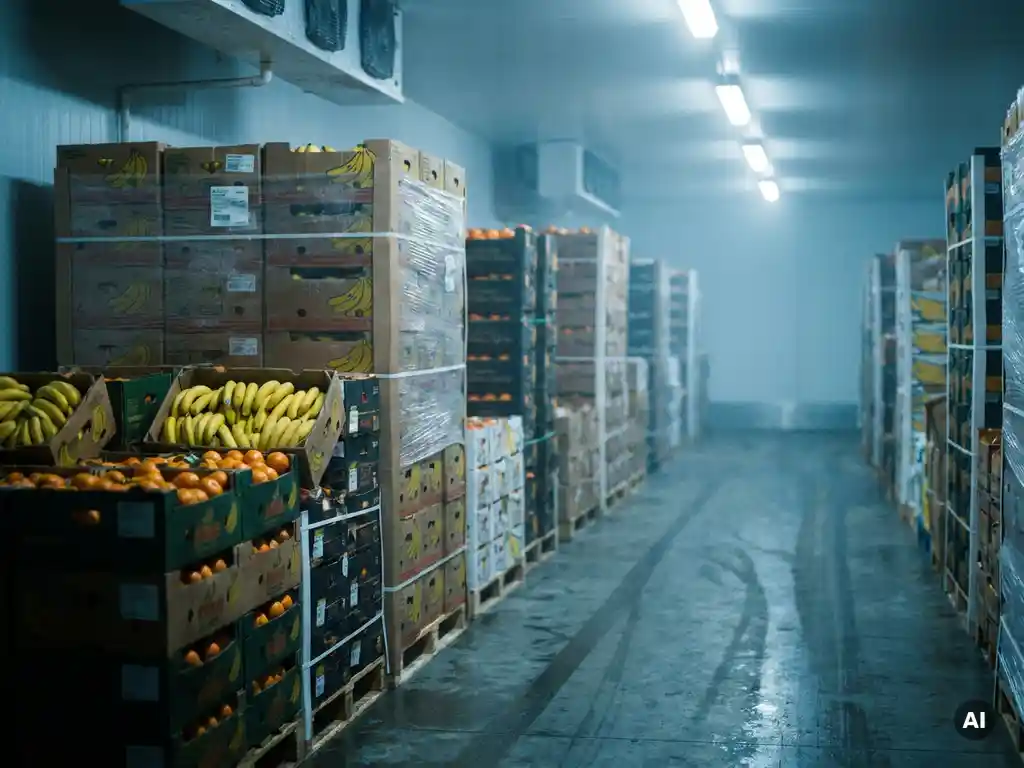
Supermarket suppliers opt for external buffer storage in Europe because it enables them to handle seasonal peaks, fluctuating supply volumes, and strict delivery deadlines without having to invest in expensive storage infrastructure themselves. External buffer storage offers flexibility, cost control, and the assurance that products are stored under the right conditions until the moment of delivery. In this article, we answer the most frequently asked questions about buffer storage for supermarket suppliers in Europe.
What are the benefits of external buffer storage for supermarket suppliers?
External buffer storage gives supermarket suppliers the opportunity to temporarily store inventory with a specialized third party, without having to own or manage storage capacity themselves. The biggest advantage is operational flexibility: suppliers can purchase larger quantities when the market demands it and deliver the goods to the supermarket chain in phases.
Other concrete benefits are:
- Cost management: No fixed capital investment in own cold storage facilities or warehouses. Storage costs are variable and scalable by volume.
- Quality assurance: Specialized storage partners have certified facilities and continuously monitor temperature and humidity.
- Security of supply: A buffer between import and distribution prevents delays in supply from directly leading to empty shelves at the supermarket.
- Compliance support: Recognized warehousing partners can handle import inspections and customs clearance, which simplifies the process for the supplier.
- Scalability: Capacity can be scaled up or down depending on the season or the demand from the supermarket chain.
For suppliers operating in supermarket logistics, buffer storage in Europe is therefore not a luxury, but a logistical tool that directly contributes to reliability for the customer.
How does temperature-controlled buffer storage work in practice?
Temperature-controlled buffer storage entails that products are stored immediately upon arrival in an environment where temperature, humidity, and air circulation are precisely monitored and regulated. This is done based on the specific requirements of the product, so that quality loss during the storage period is minimized.
In practice, the process generally proceeds as follows:
- Arrival and unloading: Goods arrive by container, truck, or ship and are unloaded directly into the cold storage or warehouse.
- Quality control upon arrival: Products are assessed for condition and temperature, so that any deviations are detected immediately.
- Climate setting: The storage space is set to the temperature and humidity required by the product. Specific ranges apply to exotic fruits such as bananas and citrus fruits.
- Continuous monitoring: Automated systems continuously measure and record climate conditions, even outside office hours.
- Phased delivery: Goods are released on demand and prepared for transport to the next link in the chain.
This process ensures that products still meet the quality requirements set by the buyer upon arrival at the supermarket or processing plant. For fresh, perishable products, this distinction is crucial.
When is external storage the right choice for a supplier?
External storage is the right choice when a supplier faces irregular supply volumes, seasonal demand, or a mismatch between the arrival time of goods and the delivery time to the supermarket chain. Outsourcing to a specialized partner is also advisable when there is a lack of in-house storage capacity or when specific climate requirements apply that are not feasible internally.
Concrete situations in which external buffer storage is particularly relevant:
- Import shipments arrive in large volumes, but the supermarket chain takes delivery of smaller quantities weekly.
- The on-site location does not have certified cold storage cells that meet BRC or other food safety requirements.
- The product requires import inspection (as with fresh fruit via the NVWA/KCB), and the storage partner can facilitate this on-site.
- The supplier does not want to tie up its working capital in storage infrastructure and prefers variable costs.
In short: as soon as logistical complexity exceeds what can be managed efficiently internally, external storage is a rational and cost-effective choice.
What is the difference between cold storage, freezer storage, and dry storage?
The difference between cold storage, freezer storage, and dry storage lies in the temperature range and the type of product for which they are suitable. Cold storage keeps products above freezing at refrigerated temperatures, freezer storage keeps products frozen below zero degrees, and dry storage is intended for products that do not require temperature control but do require a stable, dry environment.
Cold storage
Cold storage is suitable for fresh products such as vegetables and fruit that are sensitive to temperature fluctuations. Temperature and humidity are precisely controlled to slow down ripening and spoilage. For exotic fruit, specific temperature ranges often apply that differ from standard cold rooms.
Dry storage
Dry storage, also known as ambient storage, is intended for products that do not require refrigeration but must be protected against moisture, temperature fluctuations, and pests. Examples include nuts, peanuts, seeds, and other non-perishable food products. A well-designed dry storage warehouse offers separate areas for different product categories to prevent cross-contamination and odor transfer.
What role does port location play in the choice of a storage partner?
The port location of a storage partner has a direct impact on product quality and the efficiency of the logistics chain. The shorter the time between unloading from the ship and placement in the controlled storage area, the less temperature stress the product undergoes. This is particularly relevant for fresh, fragile products such as exotic fruit.
A storage facility located directly at the quay eliminates the need for intermediate road transport. This limits exposure to outside temperatures, reduces the risk of mechanical damage, and shortens the total turnaround time from ship to storage. For supermarket suppliers working with strict quality and freshness requirements, this is a substantial advantage.
In addition, location relative to major European ports plays a role. Storage locations near Rotterdam or Antwerp are easily accessible to large container ships and offer rapid access to the European distribution centers of supermarket chains.
How do supermarket suppliers choose the right cold storage partner in Europe?
Choosing the right cold storage partner requires an assessment based on multiple criteria simultaneously: certifications, location, flexibility, services offered, and the extent to which the partner aligns with specific product requirements. A supplier delivering fresh products to supermarkets has different needs than a wholesaler of non-perishable dry goods.
Relevant selection criteria include:
- Certifications: Check whether the partner holds accreditations such as BRC, SKAL, or Demeter, depending on the product category and the requirements of the supermarket chain.
- Climate control: Can the partner supply the specific temperature and humidity settings that your product requires?
- Location and accessibility: Is the facility strategically located in relation to the port of entry and the customers?
- Flexibility: Can the partner scale with your volume and respond to fluctuating supply times?
- Additional services: Does the partner also offer import inspection, customs clearance, or container handling, so that you can work with a single party?
A partner who combines all these elements reduces the risk of quality loss, delays, or administrative complications in the chain.
How ZZColdstores helps with external buffer storage for supermarket suppliers
ZZColdstores has been active since 1994 as a B2B logistics partner for supermarket suppliers, importers, and wholesalers requiring reliable, flexible storage solutions in Europe. With locations in Kruiningen and Vlissingen, including its own quay directly next to the cold storage facility, ZZColdstores offers a demonstrably short route from ship to controlled storage.
What ZZColdstores specifically offers:
- Temperature-controlled cold storage for fresh products such as exotic fruit, with precise climate control 24/7
- Dry storage in a new warehouse with 12,000 pallet spaces for nuts, peanuts, seeds, and other non-perishable food products
- Container handling and unloading directly at our own quay in Vlissingen
- Import inspection via KCB (part of the NVWA) and on-site customs clearance
- Certifications: BRC, SKAL and Demeter
- Flexible capacity planning that aligns with ship sailing schedules and the customer's delivery rhythm
Would you like to know if ZZColdstores is the right partner for your buffer storage needs? Contact us via the ZZColdstores website for a no-obligation consultation with one of our specialists.
Frequently Asked Questions
What is the maximum time a product can remain in external buffer storage without loss of quality?
The maximum storage duration varies significantly depending on the product type and the climate conditions used. Exotic fruits such as bananas can generally be stored for a few weeks at the right temperature and humidity, while dry products such as nuts and seeds remain usable for months in a well-conditioned dry storage warehouse. A specialized storage partner can advise on and monitor a realistic storage period based on your specific product and origin.
What are the most common mistakes suppliers make when choosing a storage partner?
A common mistake is selecting solely on price, without considering certifications, climate options, and additional services such as import inspection or customs clearance. Suppliers also frequently underestimate the importance of location: a storage facility not situated directly at the port of arrival introduces extra transport time and temperature stress that negatively impact product quality. Always ensure that the partner has demonstrable experience with your specific product category.
How do customs clearance and import inspections work in practice for external buffer storage?
When a storage partner holds accreditations for import inspections — such as via the KCB (part of the NVWA) — phytosanitary inspections and customs procedures can be handled directly on-site, without the need to transport the goods to an external inspection point first. This saves time, reduces the risk of temperature interruption, and significantly simplifies administrative processing for the supplier. When selecting a partner, always explicitly ask which inspections they can facilitate on-site.
As a smaller supplier, can I also make use of external buffer storage, or is this only available to large importers?
External buffer storage is particularly attractive for smaller suppliers because storage costs are variable and scale with actual volume — there is no fixed capital investment required in your own infrastructure. Many specialized storage partners work with flexible pallet space arrangements that are also profitable for smaller parties. However, it is advisable to make clear agreements in advance regarding minimum volumes and lead times so that you know where you stand.
As a supplier, how can I monitor the quality of my product while it is in external storage?
Reliable storage partners offer real-time insight into climate data via digital monitoring systems, where temperature and humidity are continuously recorded and made available to the supplier. When concluding an agreement, ask whether you will have access to this data and whether automatic notifications are sent in the event of deviations outside the set bandwidths. Transparency regarding climate conditions is a sign of a professional partner and protects you in the event of any quality disputes with the customer.
What happens if a batch of goods does not meet the quality requirements upon arrival?
At a professional storage partner, a quality control check is always performed upon arrival, during which the condition and temperature of the goods are assessed and documented. If a batch does not meet the specified requirements, this is immediately reported to the supplier so that prompt action can be taken—for example, isolating the batch, informing the insurer, or initiating a claims process with the supplier. This early detection prevents defective products from entering the supermarket chain unnoticed.
How far in advance do I need to reserve capacity with an external storage partner during seasonal peaks?
During busy seasons — such as the run-up to the holidays or periods with high import volumes of specific fruit varieties — it is advisable to reserve capacity at least four to eight weeks in advance to avoid disappointment. Discuss with your storage partner whether there are possibilities for an annual capacity plan based on expected sailing schedules and purchase obligations from the supermarket chain. A partner with flexible scalability and proactive communication is a major advantage in this regard.