
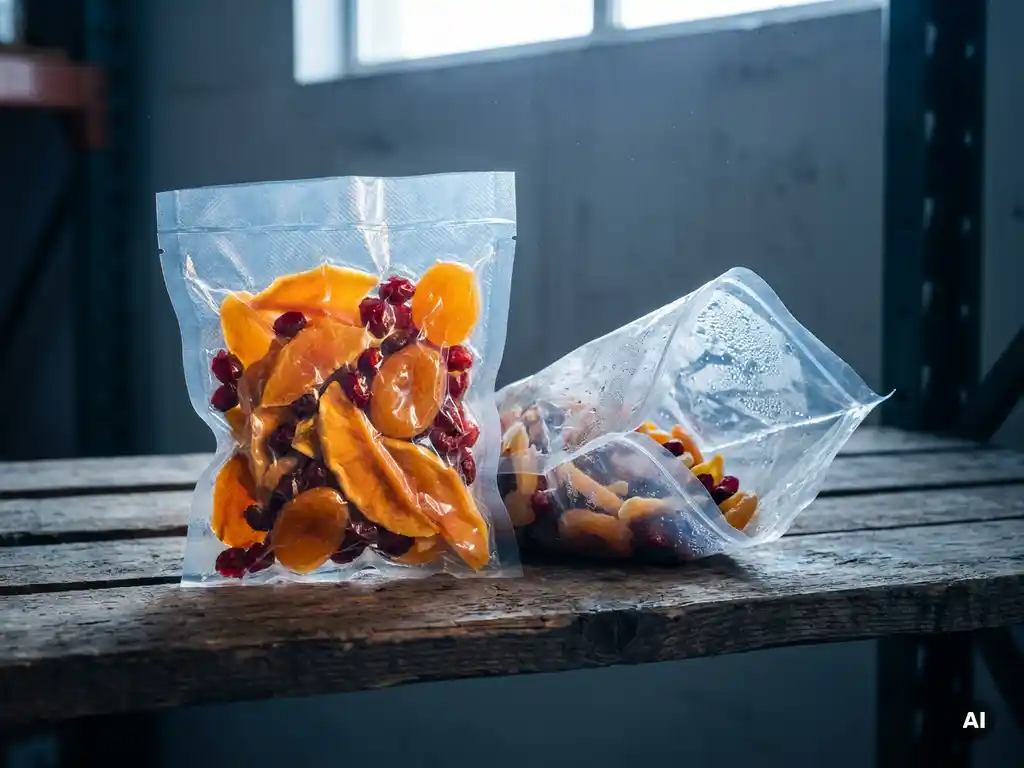
The quality of the packaging has a direct impact on the shelf life of dried fruit. Good packaging keeps out oxygen, moisture, and light, preventing oxidation, mold growth, and loss of quality. For B2B parties that import, store, or process dried fruit, choosing the right packaging material is therefore an essential part of the entire supply chain. The questions below provide concrete answers to the most frequently asked questions regarding the packaging and storage of dried fruit, organized by theme.
Which packaging materials are most suitable for dried fruit?
The most suitable packaging materials for dried fruit are multilayer barrier films, polyethylene bags, aluminium laminated film, and moisture-resistant cardboard boxes. These materials offer effective protection against moisture, oxygen, and light, the three greatest threats to the shelf life of dried fruit. The choice depends on the type of fruit, the intended storage duration, and the logistics chain.
For large-scale B2B storage and transport, multilayer materials are typically used that combine multiple barrier functions. An outer layer of polyester provides mechanical strength, while an inner layer of polyethylene protects the product against moisture. An aluminum layer in between blocks light and inhibits oxygen penetration.
- Multilayer barrier film: high protection against oxygen and moisture, suitable for long-term storage
- Aluminium laminated foil: excellent light barrier, ideal for light-sensitive products such as dried berries
- Polyethylene bags (PE): cost-effective for shorter storage periods or bulk shipments
- Moisture-resistant cardboard boxes: suitable as outer packaging for pallet storage, provided they are combined with an inner barrier bag.
- Woven polypropylene bags (PP): used for bulk products such as dried dates or figs, offer mechanical protection
The storage environment also plays a role in the choice of packaging material. Products stored in a stable, dry environment have less stringent barrier requirements than products exposed to fluctuating temperatures or high humidity for extended periods.
How does oxygen affect the quality of dried fruit?
Oxygen accelerates oxidation, leading to discoloration, loss of flavor, and a shortened shelf life of dried fruit. Even small amounts of oxygen in the packaging can trigger enzymatic and chemical reactions that affect product quality. For products with a high fat content, such as dried coconut or apricots, this risk is particularly high.
Oxidation not only affects sensory properties but can also reduce nutritional value. Vitamins, particularly vitamin C, break down rapidly upon contact with oxygen. For importers and wholesalers supplying dried fruit to processing plants or supermarket chains, controlling the oxygen content in the packaging is therefore a direct quality requirement.
To minimize oxygen exposure, two strategies are applied in practice: the physical removal of oxygen via vacuum packaging or its replacement with an inert gas via modified atmosphere packaging. Both methods are explained further in the following section.
What is the difference between vacuum packaging and modified atmosphere packaging?
Vacuum packaging removes virtually all air from the packaging, preventing oxygen from affecting the product. Modified atmosphere packaging (MAP) replaces the air with a specific gas mixture, usually nitrogen or carbon dioxide, tailored to the product. Both methods extend the shelf life of dried fruit, but differ in application and effectiveness.
Vacuum packaging
In vacuum packaging, air is mechanically sucked out of the packaging before it is sealed. This is a simple and cost-effective method that works well for hard, dry products such as dried dates, figs, or raisins. A disadvantage is that the packaging is pulled tightly around the product, which can lead to damage to the packaging or the product itself in the case of fragile or irregularly shaped products.
Modified atmosphere packaging (MAP)
MAP offers greater flexibility. By replacing air with nitrogen, the shape of the packaging remains intact and the product is not compressed. Furthermore, carbon dioxide inhibits the growth of molds and bacteria. MAP is increasingly being used in the B2B sector for dried fruit intended for further processing, as it better preserves both microbiological shelf life and presentation quality.
What role does temperature play in packaged dried fruit?
Temperature affects the shelf life of packaged dried fruit in two ways: excessively high temperatures accelerate chemical degradation processes such as oxidation and Maillard reactions, while temperature fluctuations can cause condensation inside the packaging. Storage at a stable, moderate temperature, typically between 10 and 15 degrees Celsius, is optimal for most types of dried fruit.
Even a well-sealed package offers insufficient protection if the storage temperature is not stable. When the temperature outside the package fluctuates, a vapor pressure gradient is created that can draw moisture through the packaging wall. This phenomenon, also known as “breathing” of the packaging, increases the water activity of the product and increases the risk of mold formation.
For logistics partners and storage facilities, this means that temperature control in the warehouse is just as important as the quality of the packaging itself. A stable storage environment significantly extends the shelf life of dried fruit, even when the packaging has already been opened or when products are transferred between shipments.
How do you recognize damaged or unsuitable packaging?
Damaged or unsuitable packaging is recognizable by visible tears, broken seals, bulging or dented packaging, and condensation on the inside. In the case of dried fruit, these are direct signs that the barrier function of the packaging has been compromised and that the product may no longer meet quality requirements.
During incoming goods inspection, checking packaging integrity is a standard step in the quality assurance process. In practice, the following signals are the most reliable:
- Broken or loose seals: the seal is no longer airtight, oxygen and moisture can reach the product.
- Bulging packaging: a sign of gas formation due to microbiological activity, indicating spoilage.
- Condensation on the inside: indicates temperature fluctuations or excessive water activity of the product.
- Visible pinholes or cracks: even small openings completely break the barrier effect.
- Discoloration or odor upon opening: indicates oxidation or microbiological degradation that has already taken place.
Products with visibly damaged packaging must be immediately separated from the rest of the batch to prevent cross-contamination or further deterioration of quality. This is a standard procedure in professional quality control for food products.
Which certifications are important for the packaging of dried fruit?
For the packaging of dried fruit in a B2B context, the BRC Global Standard for Packaging and Packaging Materials, the EU Regulation on Food Contact Materials (EU 1935/2004), and FSSC 22000 are the most relevant certifications. These standards guarantee that packaging materials are safe for use in contact with food and that their production complies with international food safety requirements.
For importers and wholesalers supplying dried fruit to supermarket chains in Europe, BRC certification for packaging is often a contractual requirement of the buyer. In addition, EU Regulation 1935/2004 sets legal limits on the migration of substances from packaging material into the food product, which is mandatory for all products traded in the EU.
In addition to the packaging itself, certifications also apply to the storage location. A storage facility with BRC certification guarantees that the entire chain, from incoming inspection to shipment, meets food safety requirements. This is an important factor for supply chain managers when selecting a logistics partner for the storage of dried fruit.
How ZZColdstores helps with the preservation of dried fruit
ZZColdstores offers dry storage for dried fruit in a stable, climate-controlled environment with a constant temperature of approximately 11 degrees Celsius. This is precisely the storage environment that maximally supports the shelf life of packaged dried fruit. The services provided by ZZColdstores include:
- Ambient storage in a dry, stable warehouse with 12,000 pallet spaces
- Quality control upon arrival, including inspection of packaging integrity and moisture measurements
- Repalletizing and repacking according to customer specifications
- Barcode-driven traceability linking LOT numbers to products
- BRC-certified storage, tailored to the requirements of supermarket chains and processing plants
Would you like to know how ZZColdstores can optimally store and process your batch of dried fruit? Contact us for a no-obligation discussion about the possibilities.
Frequently Asked Questions
How long does dried fruit keep with proper packaging and storage?
The shelf life of dried fruit varies greatly depending on the type and packaging method. Well-packaged dried fruit — in multi-layer vacuum barrier film or MAP — typically keeps for 12 to 24 months at a stable temperature of 10–15°C. Products with a higher moisture content, such as dried prunes or figs, have a shorter shelf life than dry products such as raisins or dates.
What is water activity and why is it so important for the preservation of dried fruit?
Water activity (aw) is a measure of the free, unbound moisture in a product and largely determines whether molds and bacteria can grow. Dried fruit must have a water activity below 0.65 to be microbiologically stable. Good packaging prevents moisture from being absorbed from the environment, which causes the water activity to rise and accelerates spoilage.
As an importer, can I have dried fruit repacked or repalletized without affecting the shelf life?
Yes, provided that the repacking takes place in a controlled environment with the appropriate equipment and procedures. During repacking, the product must not be exposed to ambient air, high temperatures, or high humidity for too long. Professional storage facilities, such as BRC-certified warehouses, possess the right conditions and protocols to carry out repacking safely and while maintaining quality.
What common mistakes are made when storing packaged dried fruit?
The most common errors are storing products directly on the floor or against exterior walls (causing temperature differences to cause condensation), mixing batches with different storage dates, and the lack of systematic packaging inspection upon arrival. Additionally, the influence of strong odors from other products in the same warehouse is frequently underestimated, as dried fruit easily absorbs odors.
Is it necessary to use oxygen absorbers in addition to good barrier packaging?
Oxygen absorbers are a valuable addition for products that are particularly sensitive to oxidation, such as dried berries or apricots with a high vitamin or fat content. They capture the residual oxygen remaining after vacuum or MAP packaging, thereby further extending shelf life. For less sensitive bulk products with a short storage cycle, a good barrier film combined with MAP or vacuum is usually sufficient.
How do I choose the right logistics partner for the storage of dried fruit?
When selecting a logistics partner, pay attention to at least BRC certification for the storage location, the possibility of climate-controlled ambient storage, and the availability of traceability systems such as LOT number registration. Also inquire about the procedures for incoming quality control and the partner's experience with food products that require specific storage conditions. A partner who already works with supermarket chains or processing plants typically understands the required quality standards.
What should I do if part of a batch of dried fruit has damaged packaging upon arrival?
Immediately isolate the affected products from the rest of the batch to prevent cross-contamination and further quality deterioration. Document the damage with photos and record the affected lot numbers for traceability and potential claim handling with the supplier. Have the affected products assessed by a quality manager before deciding whether repackaging, rejection, or expedited sale is the most appropriate next step.
Related articles
- How does inventory tracking work within a warehouse?
- What is cross-docking and when is it an alternative to buffer storage?
- What are the consequences of aflatoxin in poorly stored peanuts?
- How does ambient storage for nuts and dried fruit work?
- What is the difference between a warehouse and a distribution center?